Boka Kotorska – the cradle of the Montenegrin-Littoral Metropolis
Before Saint Sava founded the independent Serbian Church in 1219, the Orthodox population of Boka Kotorska was under the jurisdiction of the Archbishop of Ohrid. When Ohrid fell into the hands of Byzantium in 971, the entire Orthodox Slavic Church came under the authority of the Patriarch of Constantinople, so that Boka remained within its composition until the establishment of the independent Serbian Church. With the establishment of the Serbian Church, Saint Sava established the Zeta Bishopric precisely in Boka Kotorska, on the Miholjska Prevlaka. The Zeta Bishopric was elevated to the rank of a metropolitan see in 1346. After the destruction of the Prevlaka Monastery by the Venetians, the seat of the Zeta bishops changed, finally moving in 1485 to Cetinje, to the Bogorodičin Monastery, built by the Zeta lord Ivan Crnojević.
Although Boka Kotorska was under the Venetian Republic at that time, the Zeta, or rather Montenegrin, metropolitans retained spiritual authority over the entire area of the former Zeta diocese. The Venetian Republic recognized their authority there by a special agreement of September 6, 1456. The agreement was signed on behalf of the Venetians by the Venetian provider Ivan Bolano, and on behalf of Zeta by the duke Stefan Crnojević.
The Venetian government did not interfere with this right granted to the Montenegrin metropolitans even later. Moreover, it confirmed their authority with special charters, which it issued to Bishop Danilo in 1717 and 1718. Thus, the authority of the Montenegrin metropolitans remained over the Orthodox inhabitants of Boka Kotorska until the fall of the Venetian Republic in 1797 and later, during the first Austrian rule until 1806.
When, with the Peace of Požun in 1805, Dalmatia fell under French rule, Emperor Napoleon in 1808 founded the Dalmatian-Istrian diocese, annexed Boka Kotorska to it and established the Boka Vicariate, and then the spiritual administration of the Cetinje Metropolis over Boka officially ceased.
For a time, Boka formally accepted this state of affairs, although, according to a tradition that can still be heard, it did not accept a single priest ordained in Zadar who had not been confirmed by Saint Peter of Cetinje as a true and not a Uniate priest. This was the case during the time of other metropolitans of Cetinje, until the establishment of the Diocese of Boka Kotorska-Dubrovnik in 1874.
>The establishment of a separate Diocese of Boka Kotorska finally came about at the insistence of the Boka clergy and people, precisely because in this situation the Orthodox and national identity of Boka was directly threatened. Namely, when the Church in Boka Bay was forcibly and unnaturally separated from its spiritual mother, the Metropolitanate of Zeta, to which it had naturally belonged since the founding of the Serbian Church, the Boka Bay people sought to at least preserve their ecclesiastical and national distinctiveness in relation to the dioceses and regions to which they had been annexed by the will of others, first to the Dalmatian-Istrian diocese, and later to the completely artificial creation – the Bukovina-Dalmatian Metropolis.
The collapse of the Austro-Hungarian monarchy led to the creation of the state of Serbs, Croats and Slovenes, later Yugoslavia, and finally the conditions were met for the unification of the Serbian Church in 1920, which naturally included the Diocese of Boka Kotorska-Dubrovnik, which existed as such until the death of Bishop Kiril Mitrović in 1932, when it rejoined its parent diocese of Montenegro and the Littoral. Due to the rumors that have recently been heard regarding the alleged approving attitude of the late Archpriest Momčilo Krivokapić on the re-establishment of the Diocese of Boka Kotorska, I am obliged, as his son, long-time co-celebrator and successor in the Kotor parish, to testify that Father Momo was in exactly the opposite position. He was aware of the role that the diocese had played at a certain historical moment, but he did not consider its re-establishment to be in any way useful in contemporary circumstances.
The creation of a separate Boka Kotorska diocese was caused by the confluence of extraordinary circumstances and the historical conditions of occupation in which the Orthodox population of Boka found itself at a certain moment when a sudden need arose, and at the initiative of the population and clergy of Boka itself, and not anyone from outside, and as soon as the opportunity arose and the conditions were met to return to the fold of the native Metropolis, it was done without hesitation and with joy. Today, thank God, there is neither a need nor a reason, nor a desire among the Boka people themselves to change anything in this matter. On the contrary, the newly revealed saints from Boka whom we celebrate these days, Cyril the Confessor of Baošić and the Hieromartyr Michael of Krtolj, priests of the Metropolis of Montenegro and the Littoral, together with Metropolitan Joanikije Lipovac of Stoliv, strongly testify to the unbreakable bond between the Metropolis of Montenegro and the Littoral and its cradle – Boka Kotorska.
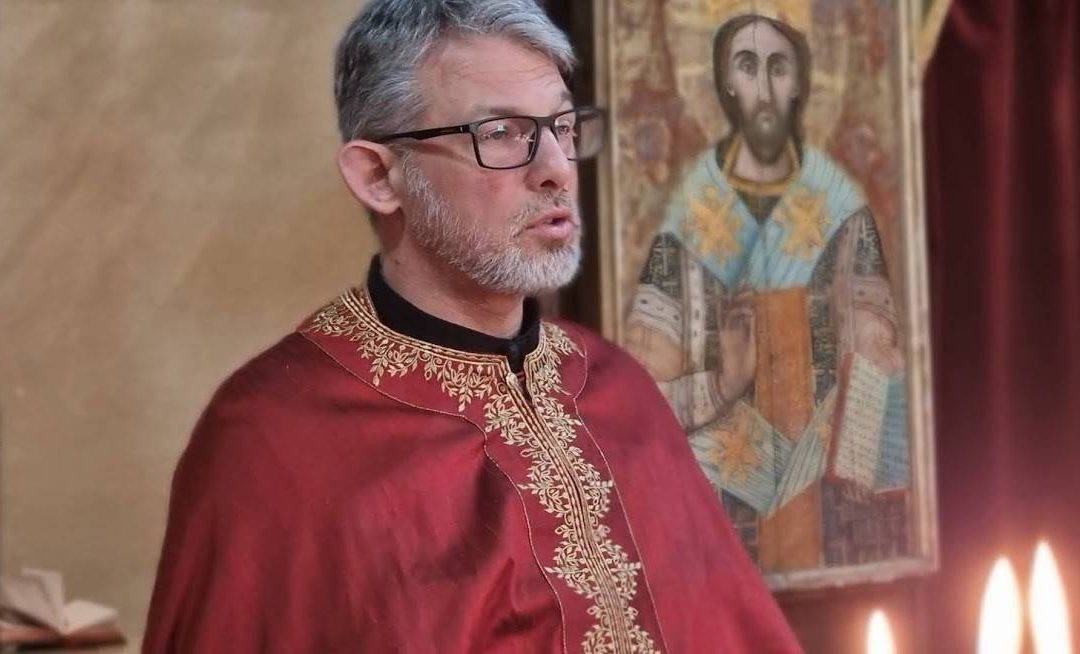
The Archbishop's Vicar of Kotor and Tivat, Archpriest-Staurophorus Nemanja Krivokapić
PHOTOS
.png)
RELATED ARTICLES
Calendar for February 28 Saint Apostle Onesimus – (Theodore's Saturday)
One of the Seventy. He was a slave to Philemon, a rich man from Colossae in...
Boka Kotorska – the cradle of the Montenegrin-Littoral Metropolis
Before Saint Sava founded the independent Serbian Church in 1219, the Orthodox...
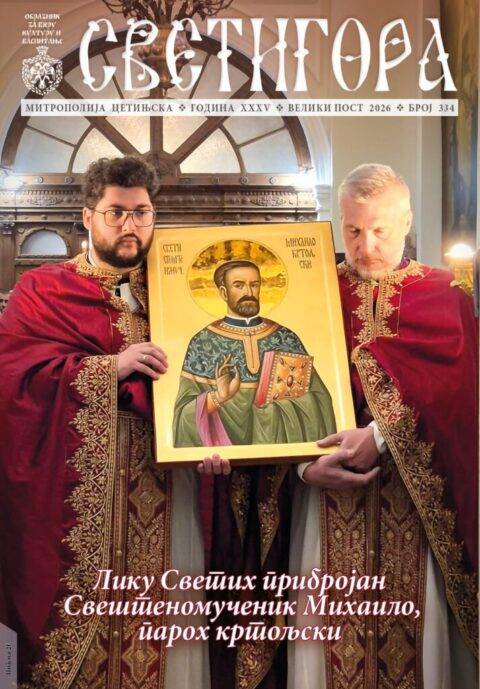
Preview of issue 334 of Svetigora: We fast with good fasting
The cover page of the new Svetigora depicts a solemn event of our church...