Father Marko Obradović: The martyrdom of priest Mihailo Barbić is the crown of his holy life
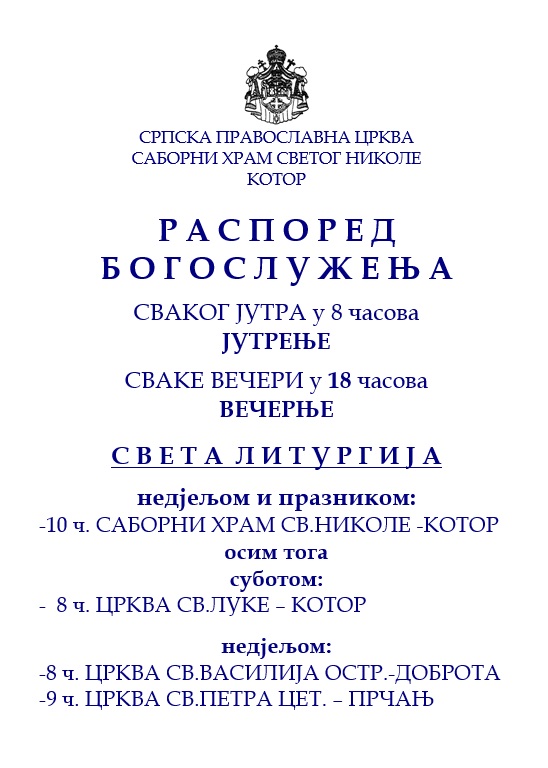
On the occasion of the upcoming canonization of the Holy Hieromartyr Mihailo Barbić, parish priest of Krtolj, which will be held on Saturday, January 24, in the church of St. Nicholas in Kotor, priest Marko Obradović, the current parish priest of Krtolj, spoke to Radio Svetigora about the life, work and martyrdom of this distinguished priest, spiritual leader and cultural figure from the Bay of Kotor.
“Of course, Father Mihailo was a great person, not only in our human perspective, but also in the perspective of our entire Church, because our Lord Jesus Christ, for whom he suffered, and for His truth, and for His teaching, has already glorified him in heaven. Now, eighty years after his suffering, it is time for us to glorify him, both in worship and among the people,” emphasized Father Marko.
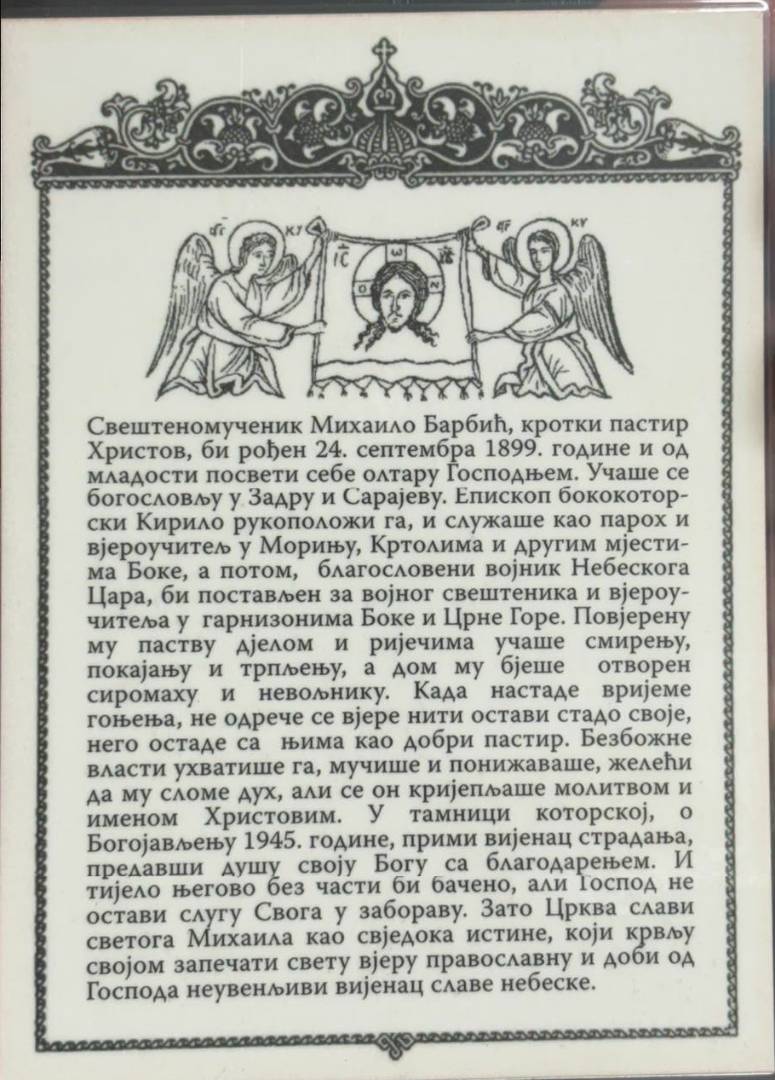
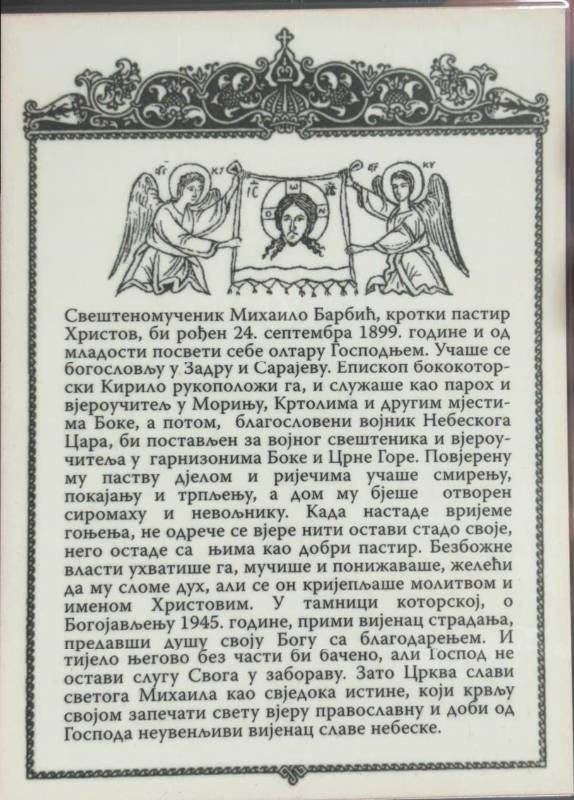
Hieromartyr Mihailo Barbić hails from Krtol, more precisely from Radovići. He was born on September 24, 1899, in Port Said, Egypt, where at that time many people from Krtol and Bokelje were working on the construction of the Suez Canal.
“His parents were working there, but his father wanted his son to grow up and be educated in Boka, where Saint Sava is loved, respected and celebrated, to be nourished by Orthodoxy, the culture and customs of this region. That is why he sent him here to study, to be educated and to grow spiritually,” recalled priest Obradović.
Speaking about the origin of the Hieromartyr Michael, father Marko emphasized the importance of the Barbić family, one of the most respected families in Krtolj.
“This is a family that produced distinguished priests, teachers, professors, true hosts and honest people. It is enough to mention his uncle, a priest in Dubrovnik, with whom Father Mihailo stayed while he attended high school in Zadar, but also descendants, such as teacher Vasilije Barbić and his son Đuro Barbić, whom I call one of the last true gentlemen of Boka, and Father Mihailo was Vasilije Barbić’s uncle,” he said.
After completing his education, Father Mihailo served as a parish priest in Morinj, then as a military chaplain in Podgorica and Dalmatia, before finally returning to his hometown of Krtole.
“As a priest, he was exceptional, but not only as a priest. He was a cultural activist, he founded charitable institutions, he supported everything that was noble and useful for the people. God gave him many talents: singing, oratory, writing and others, and he did not neglect any of them,” emphasized the parish priest of Krtoli.
A special part of his life is the war years. Caught up in the war in Dalmatia, as a military chaplain, Father Mihailo set off on foot to Krtoli.
“He traveled on foot for fifteen days. When he arrived, people barely recognized him, he was so exhausted. But his heart led him home, to his family and to his people, because he knew that Krtoli needed their shepherd in those difficult times,” said Father Marko.
During the occupation, the Hieromartyr Mihailo, according to testimonies, tried to calm the people and prevent bloodshed.
“He reconciled, reasoned, tried to direct people to good. He lived modestly, served in churches, worked on his property and did no injustice to anyone. The people loved and respected him,” emphasized priest Obradović.
However, at the time of his suffering, false witnesses and serious slander appeared, as Father Marko emphasized.
“A story emerged that he allegedly denounced people to the Germans, which is the absurdest of absurdities. These people were his relatives, godparents and friends, young people whom he spiritually guided, gave communion to and whose lives he protected,” emphasized Father Marko.
Father Mihailo was arrested, bound, and marched on foot through the village to the Kotor prison, where, according to testimonies, he was severely tortured.
“His suffering is reminiscent of the suffering of the first Christian martyrs. People who were in neighboring cells testified to what he went through,” he said.
The Hieromartyr Mihailo Barbić was slaughtered in the Kotor prison, and his body was thrown into a septic tank, from where it was later removed to an unknown location. His family – his wife and their four children – also endured the suffering.
“His family also suffered greatly, and we must keep that in mind. After his suffering and martyrdom, the family was denounced, persecuted, and humiliated, so it was not easy for them at all. He suffered in 1945, immediately after the end of the war, and his family carried their cross for decades after that in an extremely difficult time,” said priest Marko Obradović of Krtolj.
Speaking about the meaning of his suffering, Father Marko emphasized that the martyrdom represented the crown of an already holy life.
“He ended up as a martyr and was glorified by the Lord in this way. The impression that remains is that he could not possibly have remained unforgettable. If the Lord had allowed him to live, I am sure that we would also have spoken of him as an excellent poet, writer, and orator, one of the most distinguished priests of our Church at that time,” he emphasized.
However, at the time of his suffering, false witnesses and serious slander emerged, as Father Marko emphasized.
“A story emerged that he allegedly denounced people to the Germans, which is the absurdity of absurdities. These people were his relatives, godparents and friends, young people whom he spiritually guided, administered communion to and whose lives he protected,” emphasized Father Marko.
Father Mihailo was arrested, bound and led on foot through the village to the Kotor prison, where, according to testimonies, he was severely tortured.
“His suffering is reminiscent of the suffering of the first Christian martyrs. People who were in neighboring cells testified to what he went through,” he said.
The Hieromartyr Mihailo Barbić was slaughtered in the Kotor prison, and his body was thrown into a septic tank, from where it was later removed to an unknown location. His family – his wife and their four children – also suffered.
“His family also suffered greatly, and we must bear that in mind. After his suffering and martyrdom, the family was denounced, persecuted, and humiliated, so it was not easy for them in the least. He suffered in 1945, immediately after the end of the war, and his family carried their cross for decades after that in an extremely difficult time,” said Marko Obradović, a priest from Krtolj.
Speaking about the meaning of his suffering, Father Marko emphasized that the martyrdom represented the crown of an already holy life.
“He ended up as a martyr and was glorified by the Lord in this way. The impression that remains is that he could not possibly remain unmemorable. If the Lord had allowed him to live, I am sure that we would also have spoken of him as an excellent poet, writer and orator, one of the most distinguished priests of our Church at that time,” he emphasized.
By the decision of the Holy Council of Bishops of the Serbian Orthodox Church, adopted at its May session last year, priest Mihailo Barbić was inscribed in the diptych of saints as a priest-martyr, and the day of his liturgical celebration was set for January 22.
O. B.
PHOTOS
.png)
RELATED ARTICLES
Calendar for March 10 Saint Tarasius of Constantinople
On the advice of Patriarch Paul of Constantinople, who left the throne and went...
The show "Ask the Priest" with Archpriest-Stavrophor Nemanja Krivokapic
The show "Ask the Priest" with Archpriest-Stavrophor Nemanja Krivokapic, the...
Calendar for March 9 The First and Second Findings of the Head of Saint John the Baptist
When John the Baptist was beheaded, Herodias ordered his head to be buried...