FATHER NENAD KALEM ON THE SECOND SUNDAY OF LENT: IT IS NOT ENOUGH TO JUST BE NEAR CHRIST, BUT ONE MUST ALSO BE HIS IN DEEDS
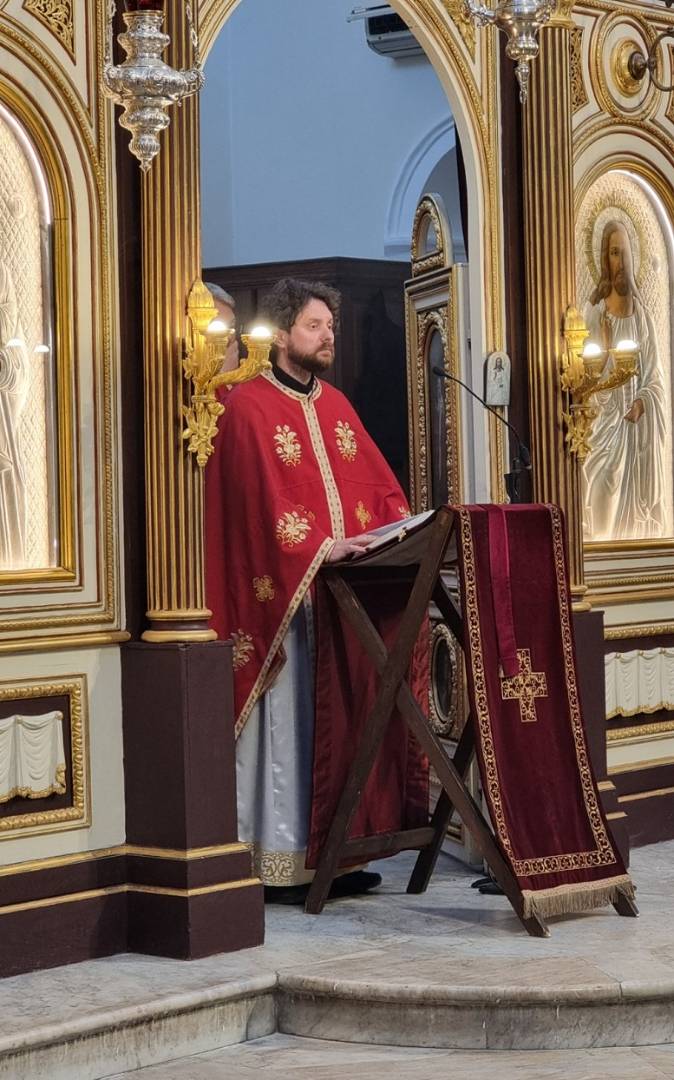
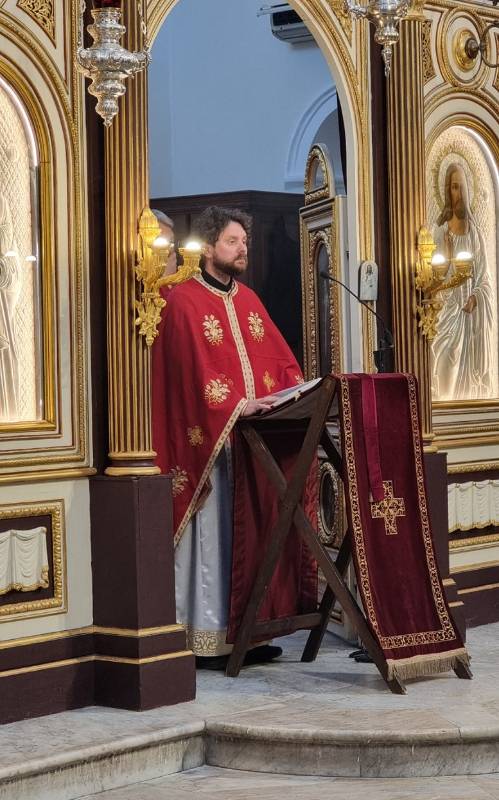
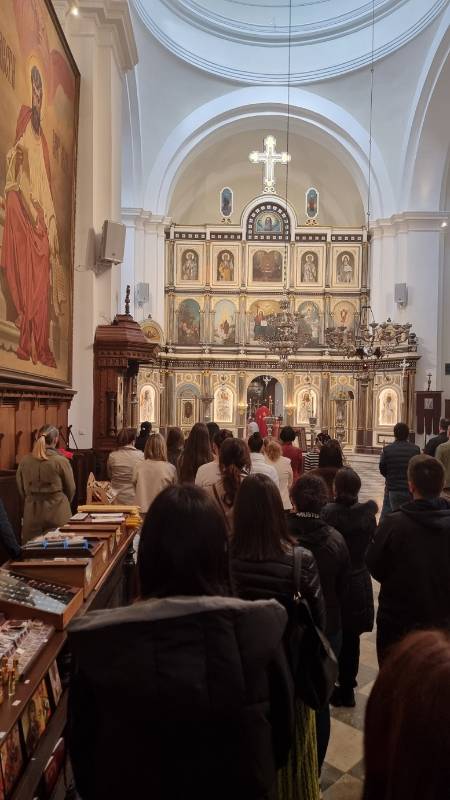
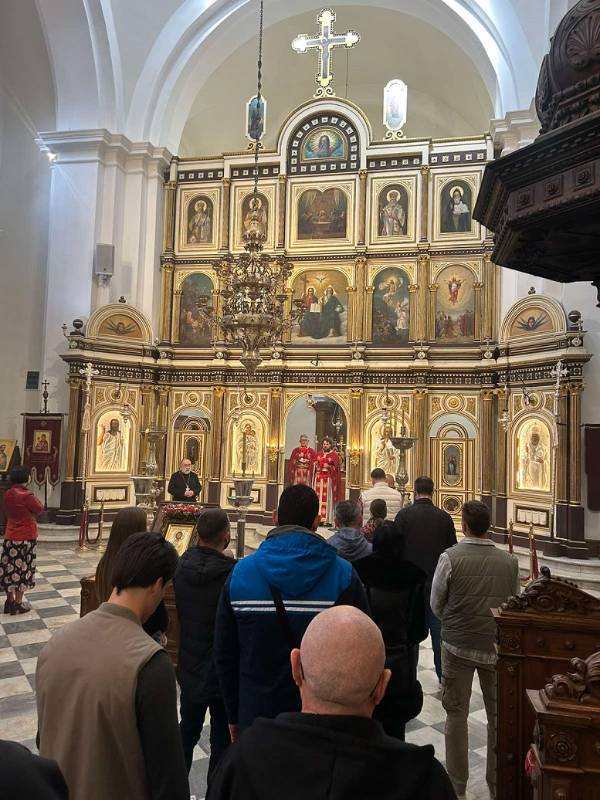
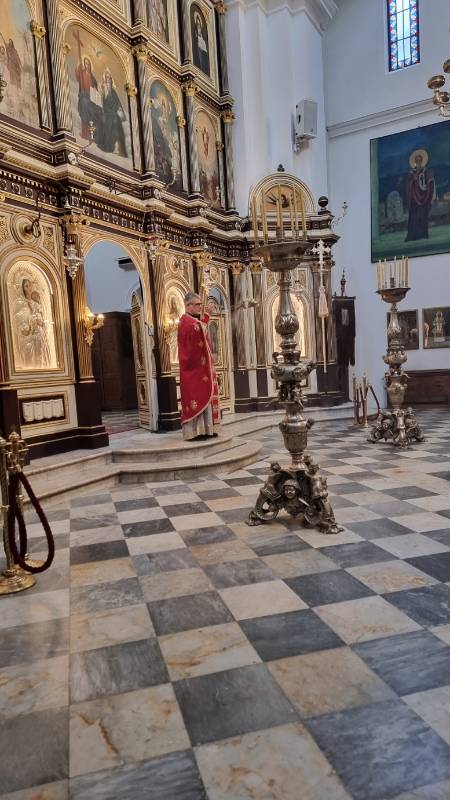
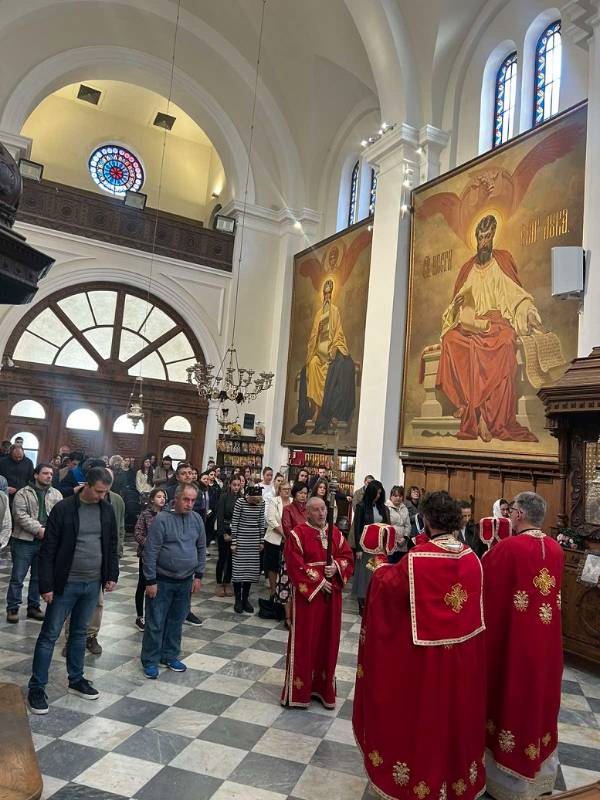
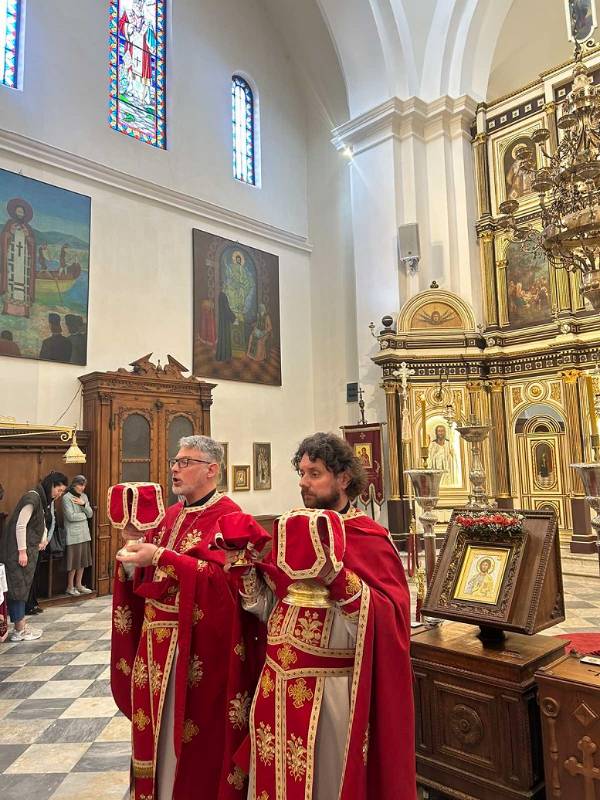
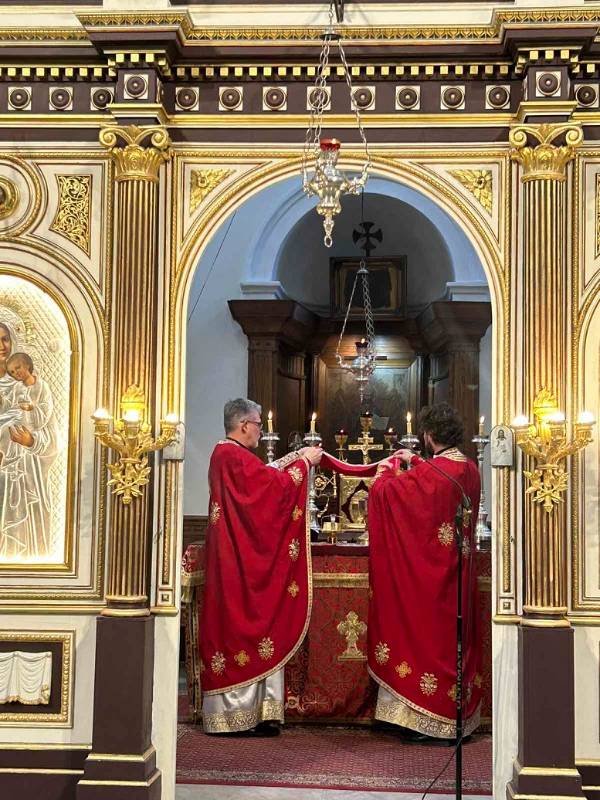
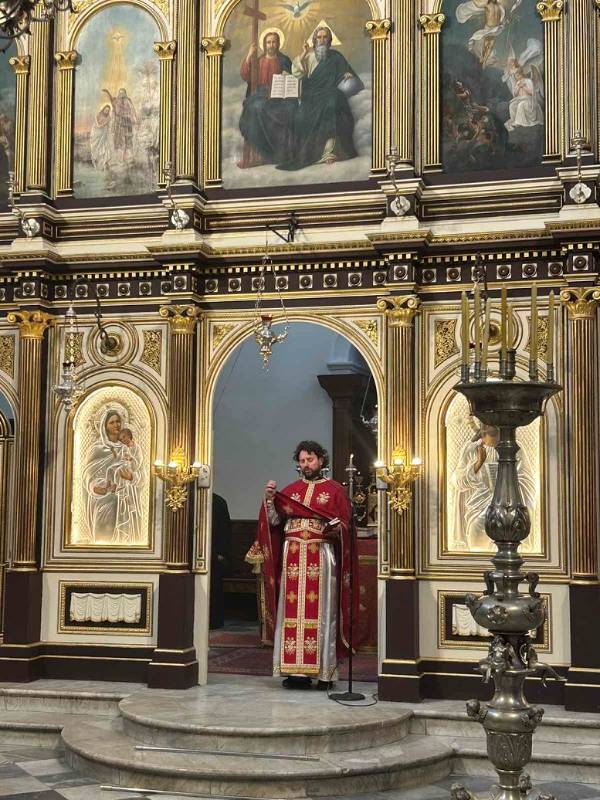
The second Sunday of Lent – the Feast of the Purification, is dedicated to Saint Gregory Palamas, and today, when our Holy Church prayerfully remembers the Holy Hieromartyr Polycarp of Smyrna, Archpriest Nenad Kalem addressed the faithful in the Church of St. Nicholas in the Old Town of Kotor.
On the reasons why the Holy Church established that the Gospel story of the Taken is read today, Father Nenad emphasized, among other things, that “it is not enough to be near Christ, but that it is necessary to be Christ in deed”.
“We heard the Gospel story about the miraculous healing of the paralytic in the city of Capernaum. This Gospel example is not given to us by chance on this second Sunday of the Holy and Venerable Apostle, because the Holy Church, through the reading of the Gospel text, draws our attention to the extraordinary feat of noble people who saw the crowd in front of the house where Jesus was and the multitude of people waiting to see Christ. They could not bring their friend through that crowd and that multitude into the house where Jesus was. They climbed up and removed the roof from the house and lowered the sick man at the feet of Jesus, so that their friend, who was paralytic and sick, could receive healing and forgiveness of sins. Through their example, we are shown that only through selfless effort and effort can one approach Christ. On that path, various obstacles and stumbling blocks await us, both from demons and from people. We also saw, as the evangelist describes, that many people were pressing and pushing around Christ, but, unfortunately, none of the spirit of Christ was in them. Because they did not feel the need of this man, sick and deprived, to pass by in order to pass into the house where Jesus was,” says Fr. Nenad.
Thus, as he points out, it is not enough to just be near Christ, as these people were, or to be in church, in order to say that a person was in it.
“It is necessary to be Christ in parts. May this example of selfless people also ignite in us a love of hard work, so that we do not succumb to inevitable temptations, but that we always persevere in good, and for a little effort the Lord will reward us more than we think,” said Fr. Nenad.
Therefore, this period of the year, this time of fasting, as he said, we should use to examine ourselves, to reflect on the meaning of life, to strive to take account of our souls and thus, in fasting and prayer, to become like Christ himself.
“That all this is possible, the Holy Fathers gave us an example, who offered God repentance, fasting, vigils, labor, prayer... This is how they lived and through it saved themselves, but also others around them. One of such greats is Saint Gregory Palamas, to whom this second Sunday of Lent is dedicated. And who was Saint Gregory? A great ascetic, prayerful, teacher of the Church, preacher of grace, as the Holy Fathers called him. He was born in 1296 in Constantinople, into a prominent family, originally from Anatolia, from Asia Minor. In Constantinople, he received the best education of that time, but, however, secular science did not interest him that much and he went to Mount Athos with his two brothers, around 1316. And there, on Mount Athos, he perfected himself in the Jesus Prayer, that is, in the technique of concentrated prayer of the heart, a method that was especially accepted in monasticism since the 15th century. This type of prayer required humility and silence, so it was called stillness or silence, in Greek "hesychia", and the monks who practiced this prayer were called hesychasts", said Fr. Nenad.
He emphasizes the great importance of Saint Gregory for the Church, especially for its history and dogmatic theology.
"Namely, at the beginning of the 14th century, Saint Gregory entered into a theological dispute and conflict with Barlavas of Calabria, a scholastic from the West, who taught incorrectly about the divine essence and energies of God, considering and recognizing in God only a unique and unknowable divine essence. He considered the energies of God to be the created power of God and that God could not be known in direct spiritual experience, because according to his words, real union with God was not possible. Thus, Saint St. Gregory, encouraged by this erroneous teaching and at the request of the monks of Mount Athos, wrote his greatest work, “The Triads,” and the teaching on the distinction between the essence and energy of God, where he says that the essence of God is an unknowable part of God’s being, and that the Divine energies and grace of God are attainable through the practice of a life of prayer, especially through the practice of the Jesus Prayer, where a person can reach the highest level of prayerful activity and see the uncreated Divine light, similar to the apostles during the Transfiguration of the Lord on Mount Tabor. This teaching of St. Gregory would be accepted by the Holy Fathers at the Council of Constantinople in 1341, and Barlaam of Calabria would be condemned as a heretic. Thus, St. Gregory and the Holy Fathers saved the Orthodox faith from yet another blow from heretics in the history of the Church,” said Fr. Nenad.
That is why the Church gives it great importance and dedicates the second Sunday of Holy and Great Lent.
“Taught by these wonderful examples from the Holy Gospel and Saint Gregory, may God strengthen us to persevere in our struggle, to prepare ourselves as best we can for the Resurrection of Christ and to be like God, to whom be glory and praise forever and ever, amen,” said Father Nenad.
PHOTOS
.png)
RELATED ARTICLES
The show "Ask the Priest" with Archpriest-Stavrophor Nemanja Krivokapic
The show "Ask the Priest" with Archpriest-Stavrophor Nemanja Krivokapic, the...
Calendar for March 9 The First and Second Findings of the Head of Saint John the Baptist
When John the Baptist was beheaded, Herodias ordered his head to be buried...
FATHER NENAD KALEM ON THE SECOND SUNDAY OF LENT: IT IS NOT ENOUGH TO JUST BE NEAR CHRIST,...
The second Sunday of Lent – the Feast of the Purification, is dedicated...