FROM THE LECTURE OF FATHER ALEKSANDR LEKIĆ ON THE LITURGY AND THE LORD'S Supper: THE EXCEPTIONAL IMPORTANCE OF FAMILY GATHERING IN A TIME OF ALIENATION
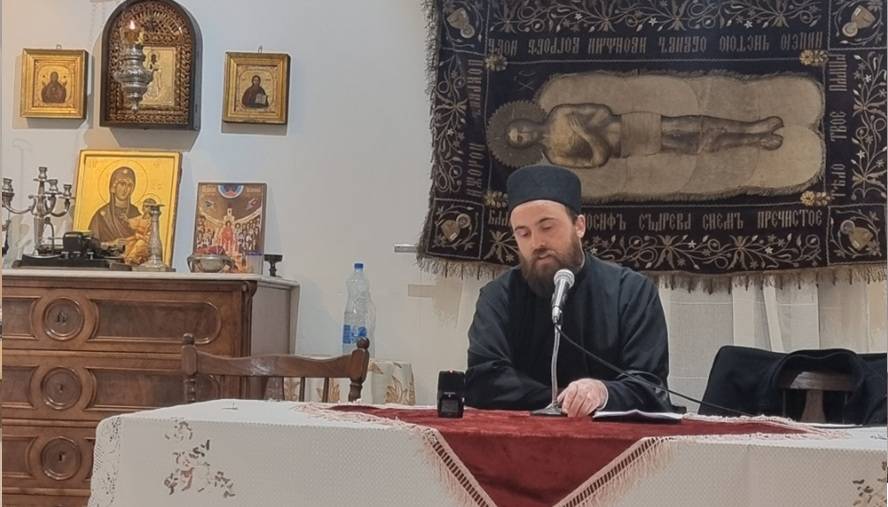
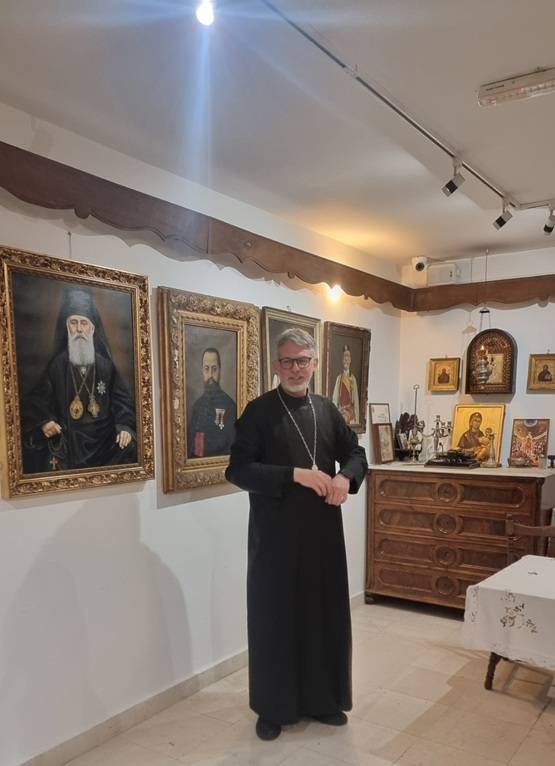
As part of the series of lectures during Great Lent, in the Treasury of the Serbian Orthodox Church in Kotor yesterday, the parish priest of Budva, archpriest Aleksandar Lekić, spoke on the topic "The Lord's Supper - about the liturgy through the Old and New Testaments".
At the beginning, he emphasizes the importance of the term "Lord's table" for the sacred liturgy.
"It's not just a simple prayer, a joint prayer, we got together, we prayed... It actually includes something special. It's that it includes a table, that is, a meal. Why is it significant? It's especially significant today in this time of contemporary spirituality, when we have a big wave from the East. Various teachings are popular, such as, say, yoga, which goes from some exercises for the body, for the health of the body and goes to some limits of the spirit. It's really interesting and popular for people. In this way, a person sits at home, has his mat, he can find his own spiritual peace with himself. It requires not only some spirituality, but also something that is material, and that is not strange. Man is not just a being, let's say, a physical being man, breathes his breath. Then the man becomes a living being and tells him to eat from all the fruits that are before him there in Paradise, except for that one tree. So, man eats from those fruits and lives. It is the connection between food and life. Through that fruit and one other, man falls. You see how connected we are to those fruits, to something that is food, something that we eat. Adam and Eve, you know the story, saw that fruit, which is beautiful to the eye, nice, tasty to eat, and also tempting, because they knew that there was some power in it. That story has a lot of depth, but you can see how the food somehow already shows itself to be significant. A man falls because of that food", said Father Aleksandar.
He reminds that Metropolitan Amfilohije, writing about the holy liturgy, "cited a very beautiful example that he found in Egypt".
"A sarcophagus was found. I don't know whether it was a woman, a noble family, maybe a princess. When they opened that chest, they found two words written down - 'I'm thirsty'. Metropolitan Amfilohije analyzes with his depth what it is that a person needs to survive there. Why is he thirsty there, on the other side of life. A touching story, which could be talked about a lot", continues Fr. Alexander.
Speaking about the connection between the holy liturgy and the Lord's table, he points out that Christ "comes, teaches the people, heals the sick, gives his life-giving words, gives us his life-giving commandments about love". "Slowly everything, the whole of his life, you see in the Gospel, comes together in that finale, and that is his death, which is for us and for our salvation, and certainly his resurrection. Before his suffering, he leaves the disciples this holy secret of the liturgy and says the words: "receive, eat, this is my body, drink from it all of you, this is my blood of the New Testament", said Father Aleksandar.
He continues that the table, as such, has a special significance, not only for the people of that time, but also today.
"However, today we all live somehow fast. Then, that's how our food is, fast food... Fast life, fast food, and families don't get together. We eat as much as we can, especially in those big cities. In the smaller ones, how many there are, life is still somehow more peaceful, but here too, everything somehow speeds up, they exist very chaotically... The family cannot gather around a meal, which is of great importance to people. Look, start with yourself. Why is a meal important? Are you going to invite every man home for lunch, to invite him to lunch? You won't. you will invite some friends, some people who are very close to you, to dine with you. What does it mean to dine with you? To commune with someone, communicate with someone, with whom we are very close, who are our neighbors...", Father Aleksandar continues.
He also spoke about the noble behavior of Christians in ancient times.
"Let's say in the Roman Empire, when difficult things happened to them. We recently had the corona, but it was nowhere near as difficult as in those times, especially when there was no such good medicine. Imagine once upon a time because of the plague, or some diseases from which people died in the cities, and the Gentiles, the pagans, would not even approach, even though it might be his mother, grandfather, grandmother... They wouldn't get sick. They would leave those people, often their relatives, like that And see the Christians, what is the character of the Christians? It springs from the holy liturgy, where Christians are nourished because it is the medicine of immortality", said Father Aleksandar, adding that because of their faith, Christians approached even the most seriously ill, helping them or burying them.
It left, he continues, an extraordinary impression on the pagans.
They would say "these are great people, people who above all have their own character, who have their own identity, who have their own faith, this faith is miraculous, they are not afraid of death... This is something that astonished other people." Although those were ancient times, some 2,000-1,800 years ago, when Christians were already persecuted, they are also important for us today to return to our faith as it should be, to have this awareness of what the sacred liturgy is and to change ourselves. In the holy liturgy, everything is collected. Both the Old Testament and the New Testament and prayers, every prayer, every word, many other things... It demands of us, not only that we gather in our church, in our very closed community, that we pray to God, that we light a candle and say "there, that's it". No, the holy liturgy requires an activism from us, that our whole week goes towards that Sunday, that it ends with it and gets its fullness", said Father Aleksandar Lekić, among other things, at the lecture "The Lord's Table - about liturgy through the Old and New Testament".
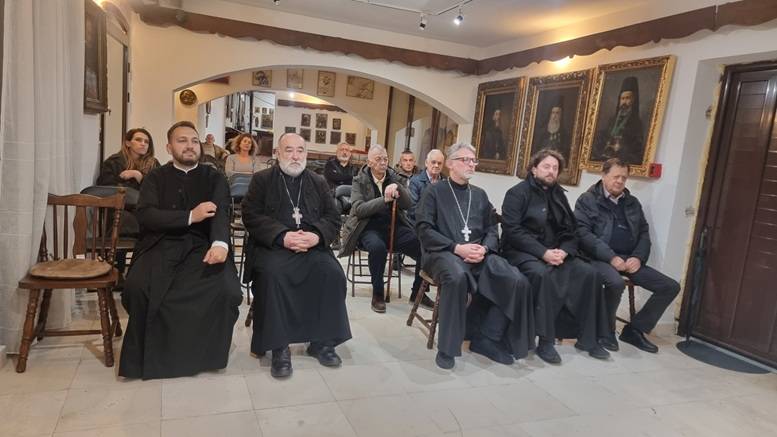
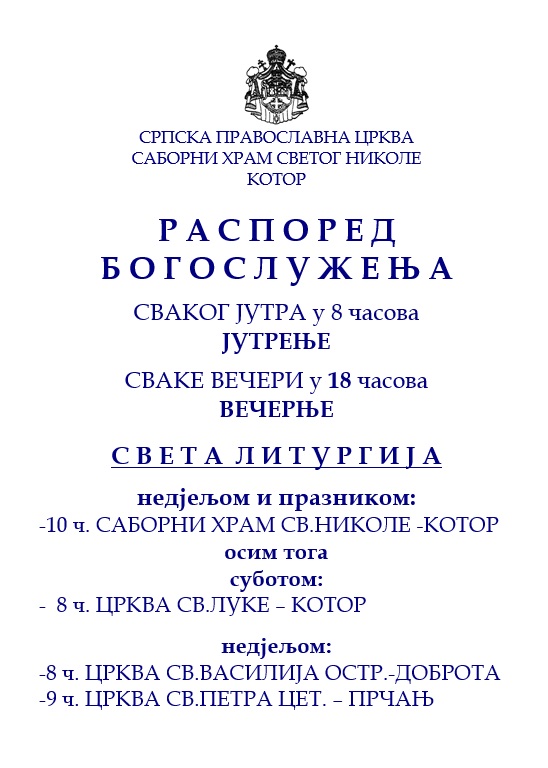
Archpriest Vicar of Kotor-Tivat, Parish Priest of Kotor, Archpriest Stavrofor Nemanja Krivokapić said that it was the last lecture in this year's cycle, which is traditionally held during the Easter fast.
Radio Kotor
PHOTOS
.png)
RELATED ARTICLES
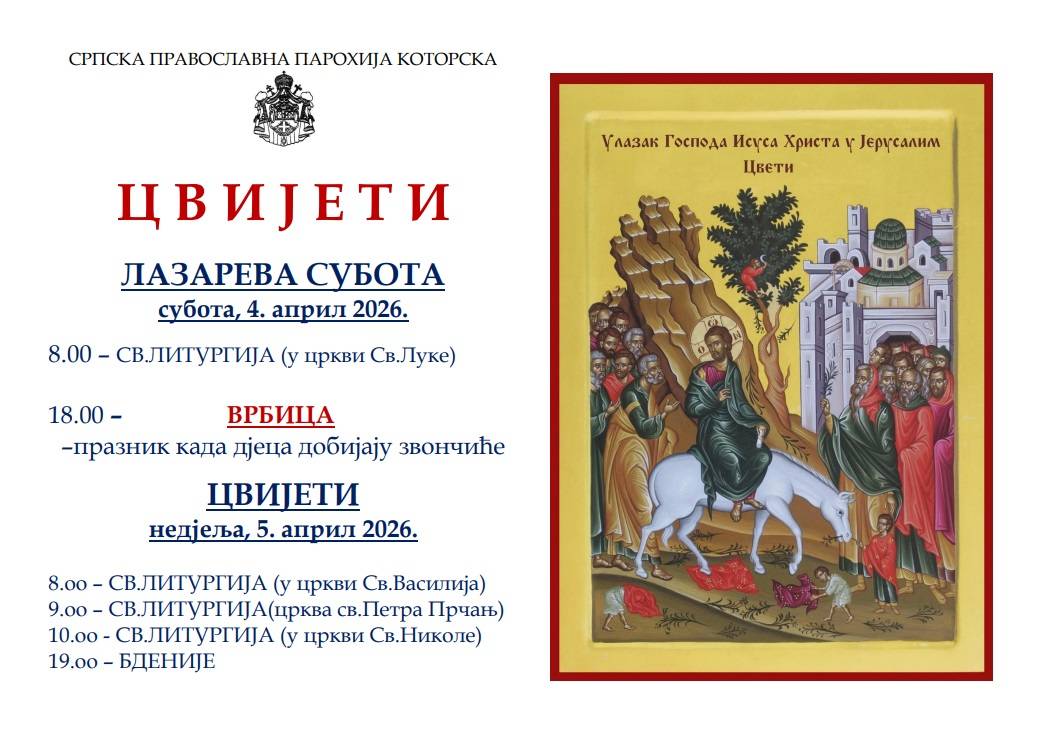
FLOWER FESTIVAL SERVICES IN THE KOTOR PARISH
FLOWER FESTIVAL SERVICES IN THE KOTOR PARISH LAZARUS SATURDAYSaturday, April 4,...
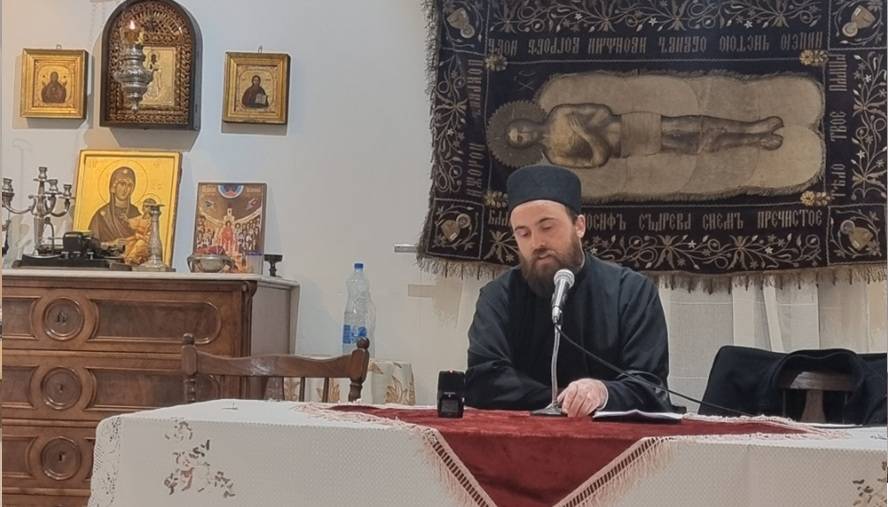
FROM THE LECTURE OF FATHER ALEKSANDR LEKIĆ ON THE LITURGY AND THE LORD'S Supper: THE...
As part of the series of lectures during Great Lent, in the Treasury of the...
Calendar for April 2 Venerable Fathers Killed in the Monastery of Saint Sava the...
The Monastery of Saint Sava the Sanctified was repeatedly ravaged by the Arabs,...