
The Exaltation of the Cross Sunday – Comfort and Encouragement in the Middle of Lent
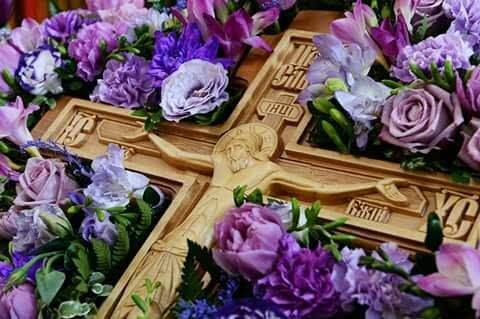
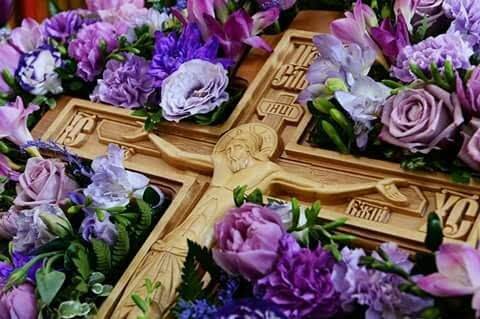
On the third Sunday of Great Lent – the Exaltation of the Cross, the Holy Cross is brought out to the middle of the church in Orthodox churches for the faithful to worship and kiss. This act has a deep spiritual significance, as it takes place right in the middle of Lent as a sign of comfort and encouragement for all who are going through the Lenten struggle.
In an interview with Radio Svetigora, Archpriest Slobodan Lukić explained that, although the act of carrying out the cross itself takes place on Sunday, preparation for this event begins at the beginning of the week. He reminded us that during the Lenten period it is important to reflect on the holidays that preceded it, as well as on the spiritual messages they carry.
"It is always nice to look back at what was behind us, so what we celebrated, which is the Sunday of Orthodoxy. We celebrated the victory of the Orthodox faith over heresies, the victory of the veneration of icons and the great ascetic of the Church of Christ, Saint Gregory Palamas and his work. After that, we continue our Lenten journey, striving for the day when the Holy Cross is brought out. That cross stands in the center of the church, in the middle of Great Lent, and all the days that come after that Sunday are marked by the veneration of the Holy and Life-giving Cross," emphasized the parish priest of Budva.
He explained that the bringing out of the cross in the middle of Lent has a deep symbolism and spiritual meaning.
“The cross is a consolation for all who fast and indicates that at the end of our Lenten journey, as at the end of every journey of the cross, the Resurrection of Christ awaits us, for which we are preparing. It also reminds us that it is necessary to accept the cross in our own lives, because without suffering and without carrying the cross there is no resurrection. This is the essence of our Christian theology. This is precisely why the Church brings the cross out in the middle of Lent — so that believers do not grow weary in their struggle, but rather so that they may find strength and consolation in it.”
Speaking about fasting, he emphasized that fasting should not be understood only as a change in diet, but as a deeper spiritual change. He also recalled the words of the late Metropolitan Amphilochius that fasting is “a change in the philosophy of life.”
“We need to ask ourselves whether we have really changed anything in our outlook on life during Lent or whether we have reduced fasting to just a change in our diet. Physical fasting is important, but it should encourage us to pay attention to our inner spiritual state. Have we become different, do we understand ourselves and the world around us better, are we able to recognize the problems that bother us and see them more clearly. These should be the true fruits of fasting – a change in our thoughts and reasoning, and for the better.”
Speaking about the correct understanding of fasting, Father Slobodan pointed out that in the lives of the saints we find numerous examples of how seriously Lent was understood as a time of spiritual transformation. In some monastic communities, at the beginning of Lent, monks went to the desert, where they spent seven weeks in prayer and asceticism.
“Sometimes they would take only a little bread and water and spend the entire fasting period in solitude. Finally, during Holy Week, they would gather again and celebrate Easter together. Some did not even return from that journey, because they had weakened physically in the struggle. But those who returned came truly transformed and were able to participate in the true way in the celebration of the victory of life and the new creation.”
He said that Lent should be understood as an opportunity for spiritual rebirth of man.
“Lent is not only a period of abstinence, but an opportunity to allow its grace, which is great, to work on us. If we approach it humbly, with attention and a cheerful spirit, it can open our spiritual vision and help us to see the world around us and the world within us differently. Then we will truly be able to say that during Lent we changed our philosophy of life,” concluded Archpriest Slobodan Lukić.
The Sunday of the Exaltation of the Cross, which is celebrated in the middle of Great Lent, reminds us that the path of Lenten asceticism and spiritual transformation leads to the joy of Christ's Resurrection.
O. B.
PHOTOS
.png)
RELATED ARTICLES
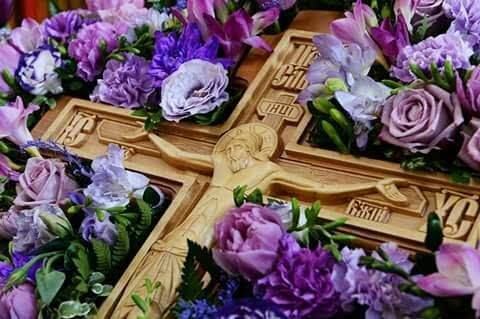
The Exaltation of the Cross Sunday – Comfort and Encouragement in the Middle of Lent
On the third Sunday of Great Lent – the Exaltation of the Cross, the...
Calendar for March 13 Venerable Basil the Confessor
He became a monk in his youth and became a disciple of Venerable Procopius the...
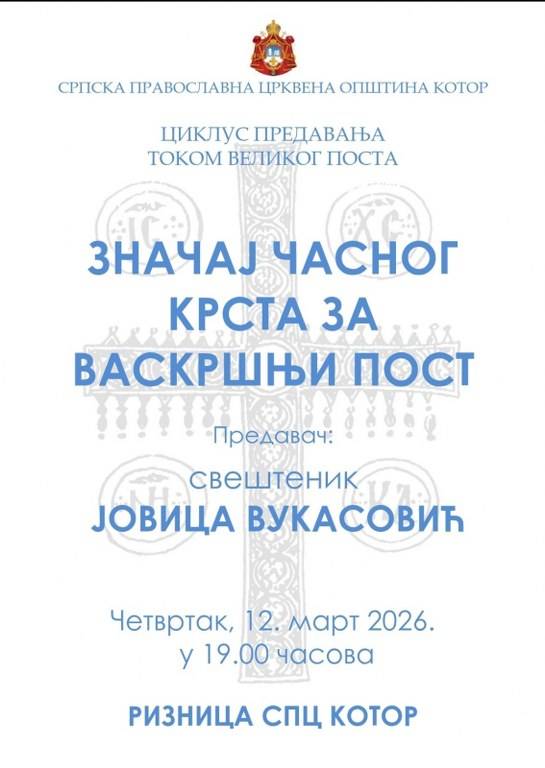
TREASURY - ON THURSDAY, LECTURE BY PRIEST JOVICA VUKASOVIĆ
"THE SIGNIFICANCE OF THE HOLY CROSS FOR THE EASTER LAST" IS THE TITLE OF THE...