
Beginning of the Indictment – Church New Year
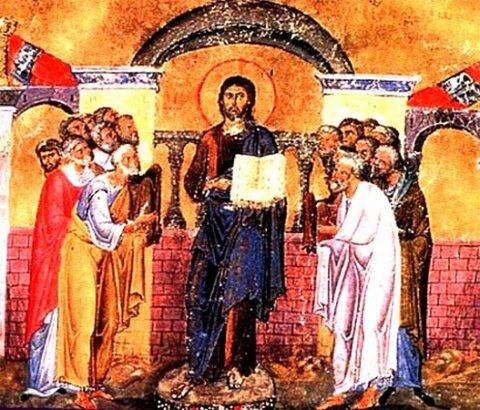
The First Ecumenical Council determined that the church year begins on September 1/14. Our Holy Church prayerfully celebrates the beginning of the Church New Year – Beginning of the Indictment.
In the 6th century, during the reign of Emperor Justinian I (527-565), the calculation of time according to indicts or indictions was introduced. The word indict comes from the Latin word indictio, and this term referred to a special decree or provision by which the tax obligations of the population for a fifteen-year period were determined in the Roman Empire. Starting from the reign of the Roman Emperor Hadrian (117-138), every fifteenth year, after the assessment of property, a special decree prescribed the tax obligations that each resident had towards the Roman state.
The funds collected from the tax were intended to support Roman soldiers whose service lasted fifteen years. The term indict, over time, began to be used as a unit in measuring and calculating the time of various historical events or in dating certain documents. On top of that, starting in 312, this term also denotes the beginning of the New Year, which has since been celebrated on September 23, that is, on the day of the autumn equinox, when the birthday of the Roman emperor Octavian Augustus was also celebrated. Since 462, the beginning of the New Year has been celebrated on September 1, so that from then on the beginning of the year coincides with the beginning of the month.
As a church holiday, the beginning of the Indictment is mentioned as early as Basil's Minology from the 10th century, where it is recorded that the Lord Jesus Christ bestowed this holy holiday on us Christians, which we give thanks to Him by celebrating it zealously. The above testimony indicates the antiquity of the celebration of the feast of the Beginning of the Indictment. Some liturgists assume that the custom of celebrating the aforementioned holiday was established as early as the 4th or 5th century. However, the oldest relevant testimony about the liturgical celebration of the Beginning of the Indictment is found only in the 8th century, in the writings of Saint Theodore the Studite.
The service of the feast of the Beginning of the Indictment brings us closer to the essential meaning and significance of the prayerful celebration of the beginning of the Church's new year. In the liturgical songs of this holiday, fervent prayers are offered to God to bless the wreath of the new year of His goodness. Celebrating the beginning of the Church New Year, at the holy services we ask the Lord, Who created days and nights, time and years (the Kontakion of the holiday), to sanctify and bless the new annual cycle, to grant the fertility of the earth and the goodness of the air, but also to bless and preserve all of us. The service of this holiday is also permeated with thanksgiving to the Lord for all the good things He has given us. In the Gospel beginning of the holiday, we hear about Christ's departure to the synagogue of Nazareth, where he read the following words from the Book of the Prophet Isaiah: The Spirit of the Lord is upon me, because he has anointed me to preach good news to the poor; he has sent me to heal the brokenhearted; to proclaim release to the captives and recovery of sight to the blind; to set at liberty those who are oppressed, to proclaim the acceptable year of the Lord (Luke 4:18-19).
The church new year also marks the beginning of the annual liturgical cycle, which consists of the holidays that we celebrate throughout the year. The first in a series of these holidays is the Nativity of the Most Holy Theotokos – the Little Lady.
PHOTOS
.png)
RELATED ARTICLES
SPD JEDINSTVO KOTOR YOUTH CHOIR HELD A MAGNIFICENT CONCERT IN LJUBLJANA
As part of its visit to Slovenia and Italy, the SPD "Jedinstvo" youth choir...
Calendar for March 7 Many Martyrs in Eugenia
During the reign of Emperor Arcadius, the relics of many martyrs of Christ were...
Calendar for March 6 Saint Eustathius
He was the Archbishop of Antioch. As a great restorer and protector of the...