The Nativity Fast Begins Tomorrow – Preparation for Meeting the Christ Child
The Church of Christ was born and developed within the polytheistic environment of the Roman Empire. A key aspect of the Church’s mission was the "inculturation of the Gospel," a process through which certain pagan customs and beliefs were transformed in a Christian spirit. Gradually, Christian feasts began to be celebrated in place of pagan ones.
At the end of each year, the Romans observed the festival of Saturnalia. Since this coincided with the winter solstice (around December 23rd), it later became associated with the celebration of the sun’s return. To eradicate this pagan custom—and to emphasize the importance of celebrating Christ and His works—the Church established the feast of the Nativity of Christ on that day; indeed, in the *troparion* (hymn), Christ is referred to as the "Sun of Righteousness." It is likely that, even then, Christians prepared for this feast through fasting. The earliest written accounts of the Nativity Fast appear in the works of ecclesiastical writers from the 5th century. At that time, the fast lasted significantly shorter than it does today—one or two weeks—until later, in the 12th century, at a council in Constantinople (in 1166), a 40-day fast was prescribed for the entire Church as a preparation for the Feast of the Nativity.
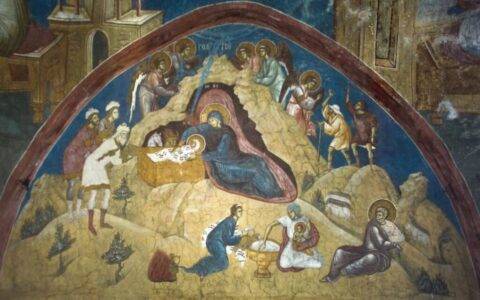
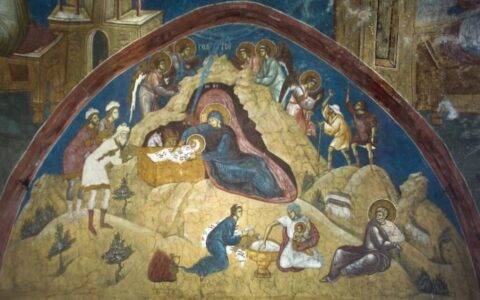
Thus, the essence and purpose of the Nativity Fast is preparation for an encounter with the Divine Infant. This preparation entails the cleansing, transformation, and renewal of our being, for the sake of encountering both God and our neighbor. It signifies overcoming—achieving victory over—the "old man" within us, and transforming our soul into a "manger" in which the Savior will be born. Just as the Wise Men from the East, guided by a star, reached the cave in Bethlehem, so too do we—guided by the fast as if by a star—arrive at the cave to worship the Child.
As we embark upon the path of the Nativity Fast, we have guides before us: the prophets and righteous men of the Old Testament who, through the ascetic labor of fasting, prepared themselves and the people for the encounter with the Messiah, who was to be born of a Virgin (Isaiah 7:14). Moses fasted for 40 days so that he might be deemed worthy to receive the words of the commandments from God upon stone tablets. We fast for 40 days so that we, too, may be deemed worthy to encounter and receive the incarnate Word of God. Therefore, on the Sunday of the Forefathers, we commemorate in our liturgical worship all the progenitors of the people of God—from Adam to the righteous Joseph, the betrothed of Mary—as well as all the prophets who preached about Christ, from Samuel to John the Baptist. On the Sunday of the Fathers, we celebrate all of Jesus’s ancestors according to the flesh, as listed in the genealogies found in the Gospels of Matthew and Luke.
During the first week of the Fast, we celebrate the great and wondrous feast of the Entry of the Most Holy Theotokos into the "Holy of Holies." This marked the beginning of her service to God, which found its fulfillment in the immaculate birth of the Son of God. The entire life of the Most Holy Virgin was one continuous, humble "YES": "Behold the handmaid of the Lord; let it be to me according to your word" (Luke 1:38). In this way, the Nativity Fast serves as an image of the life of the Theotokos; it is also our own "YES"—our consent for Christ to be born within our souls.
Our people have imbued the three preparatory Sundays leading up to the feast of Christmas with special significance. At the heart of this lies the importance of the family, which serves as an image of God’s love and the relationship between God the Father and His children. The ritual "binding" and "loosing" between parents and children reflects the reconciliation between God and humanity—a reconciliation brought about by the birth of the God-man and the breaking of the bonds of sin that held us captive until His coming. Fasting has a character that encompasses both the Cross and the Resurrection; through fasting, we voluntarily "crucify" ourselves, aligning our own will with the will of the Church and its grace-filled, liturgical way of life. Fasting is not an end in itself; it is a means, and it attains its full significance only through Eucharistic Communion with Christ and in unity with the people of God.
Fr. Slobodan Lukić
Photo: Visoki Dečani Monastery
PHOTOS
RELATED ARTICLES
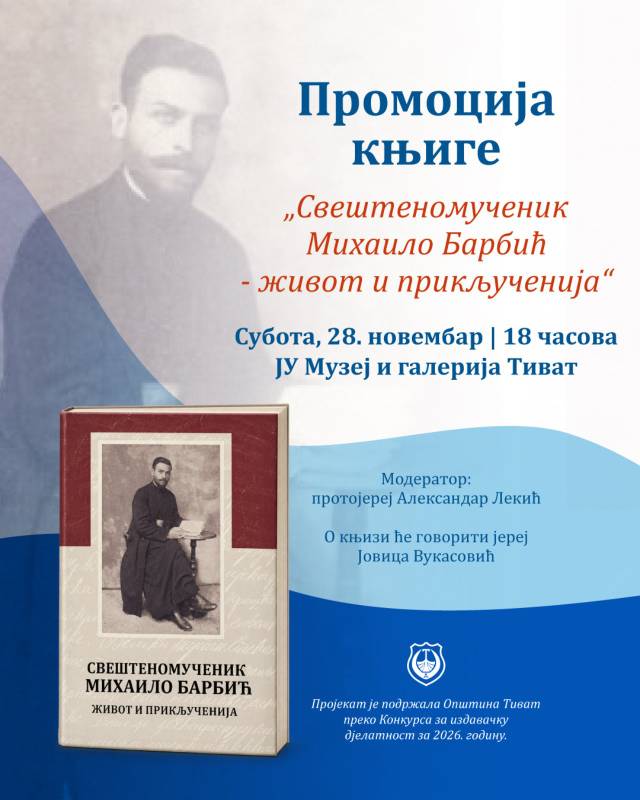
An Evening Dedicated to Hieromartyr Mihailo Barbić in Tivat
On Saturday, November 28, 2026, an evening dedicated to Hieromartyr Mihailo...
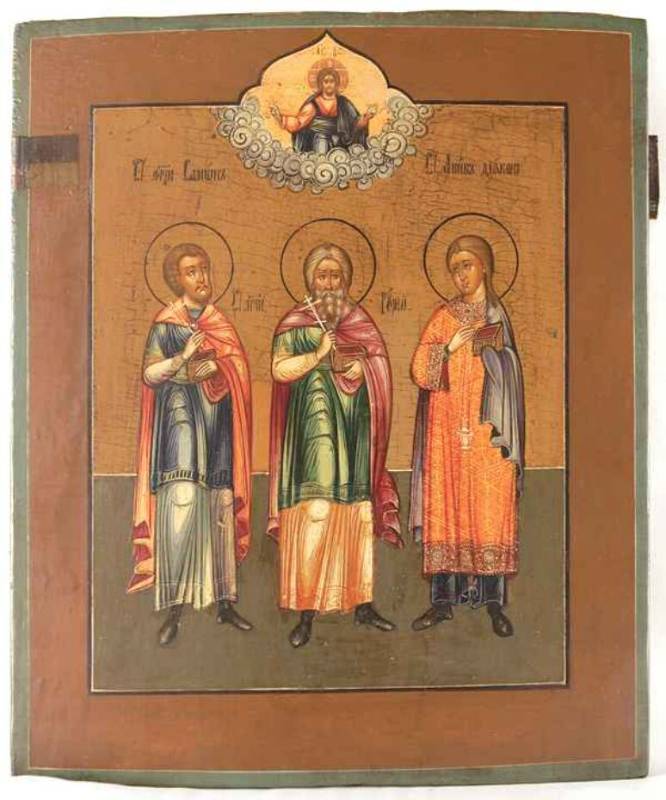
Calendar for November 28 Holy Martyrs Gurias, Samonas, and Abibus – Beginning of the Fast
During the persecutions under Licinius, Gurias and Samonas refused to renounce...
The Nativity Fast Begins Tomorrow – Preparation for Meeting the Christ Child
The Church of Christ was born and developed within the polytheistic environment...