Press Release of the Holy Council of Bishops
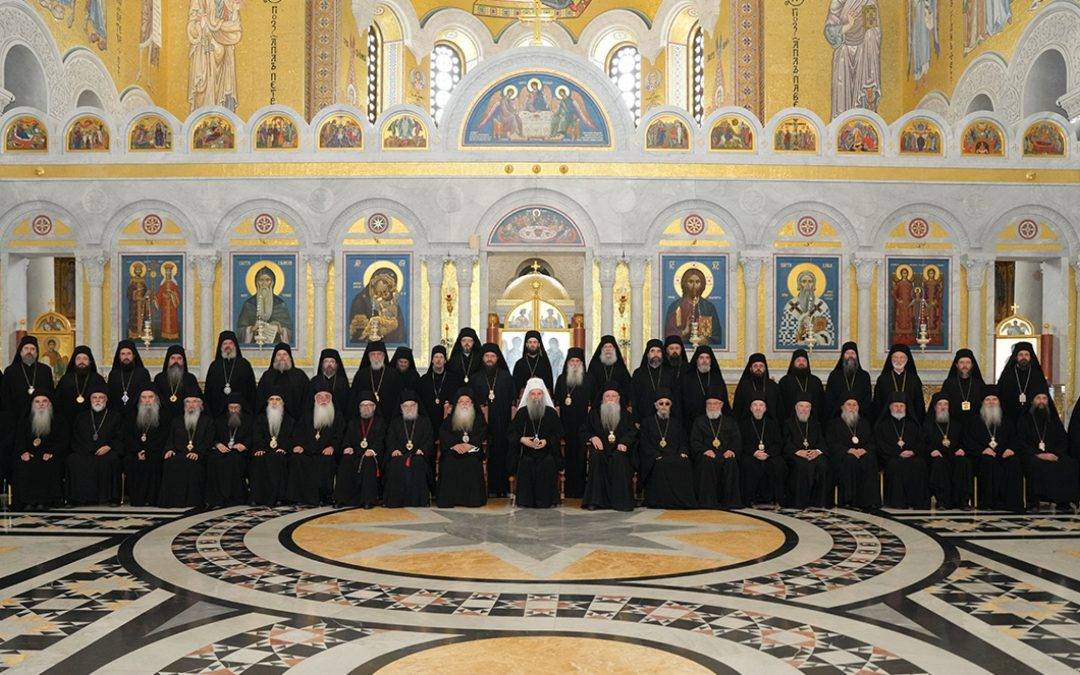
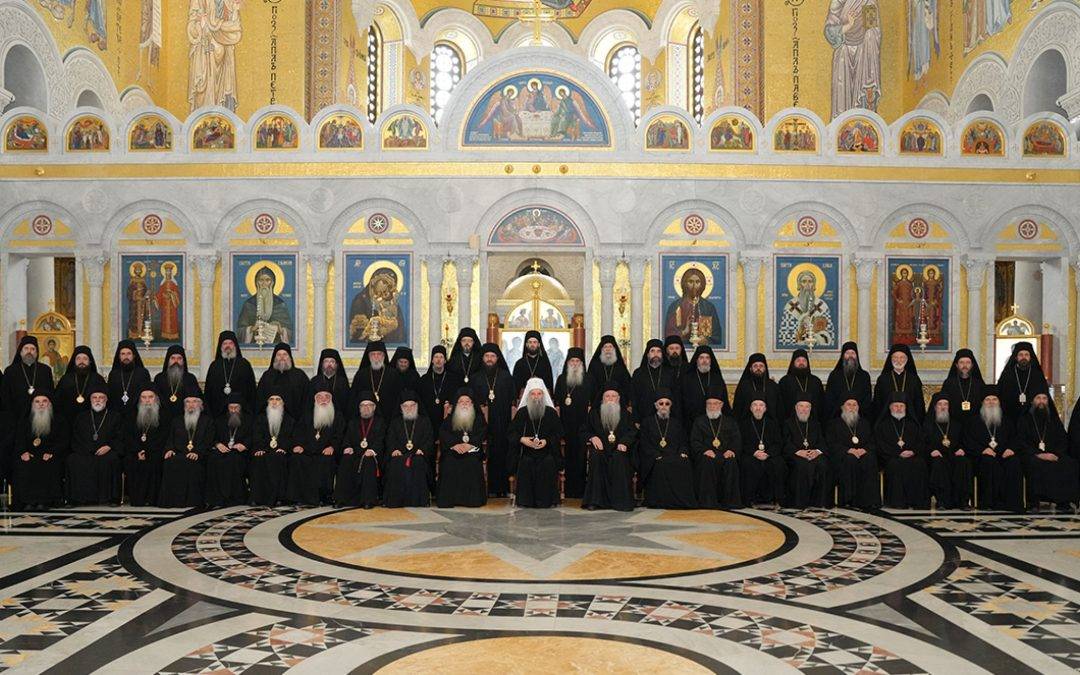
Press Release of the Holy Council of Bishops of the Serbian Orthodox Church from the Regular Session Held in the Temple of Saint Sava in Belgrade from May 13 to 19, 2026
This year's regular session of the Holy Council of Bishops of the Serbian Orthodox Church began with the Holy Synodal Bishop's Liturgy and the Invocation of the Holy Spirit in the Memorial Temple of Saint Sava in Vračar on Wednesday, May 13, 2026, with the presiding of His Holiness the Patriarch of Serbia, His Holiness Porfiry, and the concelebration of twenty-four and the prayerful presence of four more hierarchs of the Serbian Church from the homeland and the Diaspora.
The next day, May 14, in the lower church of the Temple of Saint Sava in Vračar, dedicated to Saint Prince Lazar, the Holy Council of Bishops, under the presidency of His Holiness and with the participation of all His Eminences and Most Reverend Lords of the dioceses and in the presence of all vicarious bishops of the Serbian Orthodox Church, began its working part of the session. According to established practice, at the beginning of the first working session, His Holiness the Serbian Patriarch G. Porphyry in which, among other things, he said:
“… In the Church, none of us lives as an isolated individual, nor is any of us the owner of the ministry and gift entrusted to him. Everyone serves in the Body of Christ, in community, in obedience, in his rank and in the place entrusted to him. Just as in the Liturgy everything has its time and place, so in the life of the Church every ministry has its measure, blessing and responsibility.
Taxis – order in the Christian experience of the Church is not a fetter imposed on freedom but a reflection of the divine Logos in the order of creation and the life of the Church. Freedom in the Church is not arbitrariness but service in truth and love; it is not a rejection of order, but life in it, where love is not an excuse for chaos, zeal does not turn into imposition, and power does not serve to dominate but to serve.
It is precisely from such a liturgical and conciliar experience of the Church that her canonical order. The people of God, the clergy and the monastics await the voice of the Council with attention and hope, and therefore it is our duty not to be guided by temporary pressures, media-created divisions and artificially produced conflicts, but to preserve the freedom of ecclesiastical judgment. But this freedom does not mean closing our eyes to problems, but rather the readiness for the Council, when the time comes and when the questions are ripe, to consider with spiritual responsibility, sobriety and appropriate canonical-legal foundation also those wounds that arise in the very life of the Church, correcting with spiritual responsibility what has proven to be harmful to the life of the Church, for the sake of peace, order and spiritual health of the Church…
…We gather, therefore, not to establish a new order, but to return, as brothers and hierarchs, to that order that Christ Himself has given us, through His apostles, the holy Fathers and Councils, as well as through the centuries-old experience of our local Church, entrusted to be kept. Taxis does not suppress charisma but preserves it from weakening and arbitrariness. Community, koinonia, is not the result of human agreement but the very grace-filled life of the Body of Christ, which is preserved in faith, love and fidelity to the order that the Holy Spirit has given to the Church…
… I pray to the Risen Lord to grant us a spirit of humility, sobriety and love; a word that does not wound but heals; a zeal that does not destroy but builds up; a freedom that does not grow into arbitrariness but is transformed into obedience to the truth. And that in everything we do these days we have before our eyes not ourselves, not fleeting glory and not the fear of men, but Christ the Lord, before whom we will all give an account for the flock entrusted to us…”
In the following council sessions, reports on the work of the Holy Synod of Bishops, the Great Church Court, were heard and analyzed and diocesan hierarchs, then reports of hierarchs in charge of military chaplains in the Serbian Army and the Armed Forces of Bosnia and Herzegovina, as well as reports on the work of the Patriarchal Administrative Board, the Patriarchal Library, the Museum and Archives of the Serbian Orthodox Church, the charitable foundation "Čovekoljublje", the pilgrimage agency "Dobročinstvo" and other foundations, institutions and services of the Serbian Orthodox Church, on their work in the previous year.
The Council considered with particular attention the reports on the archpastoral work of hierarchs in the diaspora, with special reference to the situation in the dioceses of the Serbian Orthodox Church in the United States of America, Australia and the British Isles.
During this year's session, the Council Fathers canonized the late nun Jefimija Devicka, known among the people as "blessed Stojna" (Zarić), who died in 1895, recognizing in her person an example of a virtuous and ascetic life, whose first life was prepared by the Holy Bishop Nikolaj Velimirović. The Council determined the date of her solemn celebration to be February 28/15 of each year.
The Council analyzed the current state and problems of church education and heard reports on the work of all educational institutions of the Serbian Church. During this session, last year's activities in the field of curriculum reform in Serbian Orthodox
During this year’s session, the Council Fathers canonized the late nun Jefimija Devicka, known among the people as “blessed Stojna” (Zarić), who died in 1895, recognizing in her person an example of a virtuous and ascetic life, whose first life was prepared by the Holy Bishop Nikolaj Velimirović. The Council set the date of her solemn celebration as February 28/15 of each year.
The Council analyzed the current state and problems of church education and heard reports on the work of all educational institutions of the Serbian Church. During this session, last year’s activities in the field of curriculum reform in Serbian Orthodox theological seminaries continued. To this end, a new Regulation on theological seminaries was passed and new programs for four-year education in the theological seminaries were adopted. During the Council, a report on activities to improve the teaching process and elevate the Higher School – Academy of Arts and Conservation of the Serbian Orthodox Church to the rank of a faculty was carefully listened to, which will in the future operate as the Faculty “Despot Stefan Lazarević”. The Council paid special attention to the topic of establishing the Serbian Orthodox University “Saint Sava”. Church universities and higher education institutions founded or supported by Christian Churches are nothing new in the European and world educational space. On the contrary, they represent one of its oldest and most significant forms. Many of the most prestigious universities in Europe were established precisely under the auspices of the Church or with its direct support. Saint Sava, while still an archimandrite, founded a monastic school in Studenica, and as Archbishop, a cathedral school in Žiča. His sermons, both student and Žička, represent a kind of program of St. Sava education with clearly set spiritual, educational and educational goals. The Holy Council of Bishops concluded that the idea of establishing a church university represents an expression of responsibility and care for all who wish to acquire their education within the auspices of the Church, especially due to the fact that education and enlightenment, enlightenment and study are not interpreted primarily as a process of acquiring certain knowledge, but, above all, as the development of virtue and the path of God-knowledge.
The agenda of this year's regular session of the highest church-hierarchical body of the Serbian Orthodox Church also included a report on the state of the Church in Kosovo and Metohija. The Holy Council of Bishops of the Serbian Orthodox Church once again confirms its permanent and unwavering spiritual care and responsibility for the faithful people, clergy, monasticism and the holy places of the ancient seat of the Serbian Patriarchs and Archbishops, the Patriarchate of Pec, and the Diocese of Raška-Prizren in Kosovo and Metohija, an area of special spiritual and historical significance for our local Church. The Council is following with particular concern the latest developments and the announcement of the implementation of the controversial law on foreigners, which seriously question the survival and smooth functioning of educational and health institutions of essential importance for the life of the Serbian people in Kosovo and Metohija, as well as the increasingly frequent challenges faced by our faithful people, as well as our shrines and monastic communities, which, even in difficult circumstances, persevere in preserving the vibrant spiritual and liturgical presence of the Church in this area. It is particularly encouraging that our ancient shrines, despite numerous trials, continue to attract a large number of pilgrims from the country and the world, testifying that they are not only cultural monuments but, above all, living centers of worship, spiritual and church life. The Holy Council of Bishops gives its full support to His Eminence Metropolitan of Raska and Prizren, Mr. Theodosius, the clergy, the monasticism and the faithful people in their efforts to preserve their centuries-old presence, spiritual, cultural and historical identity, despite constant pressures and uncertainties, out of awareness of the need to continue, before domestic and international representatives with additional dedication, to bear witness to the truth about the necessity of protecting the human, religious and property rights of the Serbian Orthodox Church and its faithful people in Kosovo and Metohija and to strengthen its position in order to ensure the survival of both our faithful people and the unique Christian culture and civilization on the soil of the historical origin and spiritual center of the Serbian people.
The situation in the Diocese of Žička, its material and financial operations and the issue of the responsibility of the competent diocesan hierarch were analyzed in detail at the council sessions. In order to establish a regular church-legal order in the respective diocese, the Council made a decision to dismiss His Eminence Metropolitan Justin from further administration of the Diocese of Žička.
In its pastoral care for the faithful in these times of technological innovations and ethical dilemmas, the Council also devoted part of its attention to the issue of bioethics, having heard a report on the work of the Synodal Committees for Bioethics and for the Care of the Family and the Sanctity of Marriage.
This year's session of the Holy Council of Bishops was also enriched by the ceremonial opening of an exhibition entitled "Saint Sava", on the occasion of the celebration of the jubilee, 850 years since the birth of Rastko Nemanjić, the later first Serbian Enlightener and Archbishop, held in the Gallery of the Serbian Academy of Sciences and Arts, organized by the Museum of the Serbian Orthodox Church.
During the session, the Council sent congratulations and greetings to the newly elected Georgian Patriarch-Catholicos, His Beatitude Mr. Shi (Simeon), to whose first official liturgical presiding in the new title, in the Cathedral of the Holy Trinity in Tbilisi, representatives of our local Church, Bishops Mr. Stefan of Remezia and Mr. Nikon of Jenopol, were also delegated.
In addition to the many topics that the patriarchal hierarchs addressed at the Council, they also paid special attention to relations with other sister Orthodox Churches. Among other things, the consequences of the uncanonical activities of various religious groups in the canonical territory of our local Church were discussed, as well as the relations of our Church with non-Orthodox Churches and religious communities, both in the region and in the world.
The Council also discussed the spiritual and geopolitical consequences of military conflicts and crises around the world. On this occasion, the still topical topic of the suffering of the Ukrainian Orthodox Church by the current authorities in Kiev, the confiscation of its property, temples and monasteries, the persecution of the hierarchs, priests and monks of this only canonical Church in Ukraine, deprived of basic human rights and freedoms, guaranteed by international conventions, was also discussed. The Council therefore, again and again, raises its voice in defense of the disenfranchised and persecuted Orthodox brothers, appealing to all relevant international institutions not to close their eyes to this great injustice.
During the Council, a session of the Central Body for the Completion of the Memorial Temple of Saint Sava in Vračar was also held, on which occasion a report of this body was received on all the work carried out so far with the contributions of the pious people and with the assistance of the state of Serbia, as well as on the remaining work on this sacred Temple of the Serbian people.
The mandate of Metropolitan Photius of Zvornik-Tuzla and Metropolitan Teodosius of Raška-Prizren in the Holy Synod has ended, and they will be deputy members of this body for the next one-year period. Metropolitan Bačka and Irinej and Metropolitan of Budimlje-Nikšić Mr. Methodius, and Metropolitan of Šumadija Mr. Jovan and Metropolitan of Timočka Mr. Hilarion were elected as new members for the upcoming two-year mandate.
Source: Serbian Orthodox Church
PHOTOS
.png)
RELATED ARTICLES
Calendar for October 10 Saint Martyr Callistratus – Miholjske Zadušnice (All Souls'...
А native of Carthage. His ancestor Neochorus was a soldier under Pontius...
Miholjske Zadušnice (Autumn Memorial Saturday)
On Saturday, Orthodox Christians observe *Miholjske Zadušnice* (the...
Calendar for October 9 Saint John the Theologian, Apostle and Evangelist
The son of the fisherman Zebedee and Salome (the daughter of Joseph, the...