Saint George the Great Martyr and Victorious - St. George's Day
According to Christian tradition, the Holy Great Martyr George (also Saint George) was a Roman soldier originally from Asia Minor. Saint George is one of the most celebrated saints in the Orthodox Church, however, he is also celebrated in Catholic countries. Immortalized in the story of him slaying a dragon, he is celebrated in Canada, Catalonia, England, Ethiopia, Georgia, Greece, Montenegro, Portugal, Serbia, as well as in the cities of Istanbul, Ljubljana and Moscow. This saint is also the patron saint of professions, organizations and the sick.
According to tradition, he was born in 275/280 in the Asia Minor region of Cappadocia, into a wealthy and prominent Christian family. His father was a military officer. While he was still a child, his father suffered for Christ, and after that, little George moved with his mother to Palestine, to his mother's large and wealthy family estate, where he received a decent education. He grew up into a handsome, strong and brave young man, and as such he was taken into the army, where he quickly distinguished himself with his courage and military merits. He advanced rapidly, from an ordinary soldier to a tribune, and, at the age of twenty, Emperor Diocletian personally promoted him to the rank of comite, i.e. duke (the highest military rank, which also makes one an advisor to the emperor). During the reign of Emperor Diocletian, the greatest persecution of Christians was organized, in the year 303, the tenth in a row. Seeing that the merciless extermination of Christians had begun throughout the country, George distributed all his wealth to the poor and freed his slaves. He did the same in Palestine, releasing his servants, and bequeathing his property and wealth to the poor.
This was hard on George, and at a council he spoke out against this attitude towards Christians and their further persecution. On that occasion, he went before the emperor and boldly confessed that he was a Christian himself. Furious, the emperor ordered his soldiers to imprison him in prison.
By the emperor's order, the soldiers laid George on the ground, nailed his feet to the stocks, and placed a large, heavy stone on his chest. Thus pressed, in great pain, he waited for the morning when the emperor visited him, expecting that after these torments George would renounce his faith. However, George clearly and loudly refused to renounce his faith. The emperor then ordered a large torture wheel to be brought, with boards full of large nails, hooks, knives, and swords. Tied to such a wheel while the wheel turned with him, this lasted until his whole body was covered in wounds.
They untied him from the wheel, thinking he was dead. When they were convinced otherwise, the emperor ordered that George be buried in quicklime so that only his head was above ground, and left for three days to burn. After three days, when they dug him up, they found that he was still alive. The torture, by order of the emperor, continued. The emperor decided to call the greatest magician in the empire, named Athanasius, and he used him to defeat George. Athanasius responded to the emperor and prepared two potions – one, from which George should obey the emperor, and the other deadly. The emperor ordered that George be forcibly given the first potion, and since George did not obey, he ordered that he be given the second, deadly potion. Everyone was amazed when George came back to life.
On the advice of some courtiers, the emperor asked George to bow before the statue of the god Apollo in order to spare his life. A large crowd gathered in the temple to see how George would renounce Christianity. He approached the statue of Apollo and crossed himself, causing the statue to collapse, and with it all the other statues in the temple. Seeing this, the wife of Emperor Diocletian, Empress Alexandra, exclaimed: “I also believe in God, who gives George such strength.”
Emperor Diocletian finally ordered the beheading of both George and Empress Alexandra. The soldiers took George and Alexandra to the execution ground outside the city. The emaciated and weak Empress Alexandra, on the way to the place of execution, asked the soldiers to rest a little and there, on the execution ground, to breathe their last, before being beheaded. Having arrived at the execution ground, George stopped at a certain place and prayed. Then, George laid down his head, and was beheaded on April 23 (i.e. May 6 according to the new calendar) in the year 303. According to the will, George’s body was transferred to Lydia, and a church was later built on his grave. According to church teaching, November 16 is the day when the temple of the Holy Great Martyr George in Lydia was rebuilt, where his body was laid – and the Serbs celebrate it as a holiday under the name of Đurđic. Little is known, truly reliably, about his life. In the iconography of the Orthodox Church, Saint George has been depicted as a soldier (without a horse, in a standing position) and with a spear or sword since the 7th century.
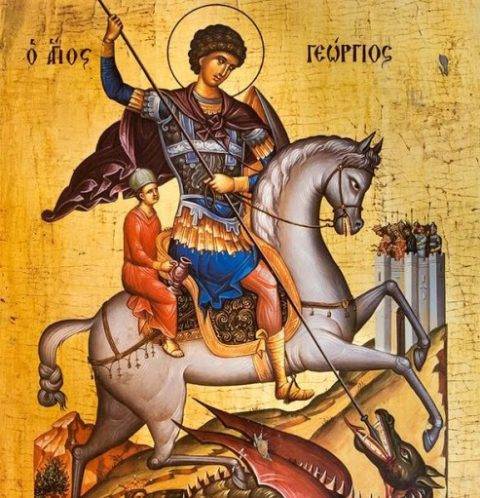
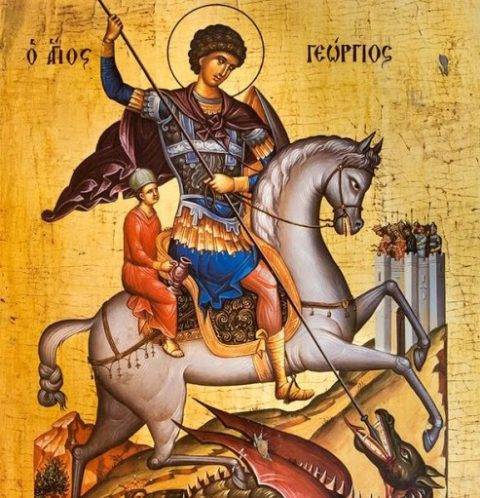
Another depiction of Saint George appears from the 9th century – on horseback, in ducal attire, killing a dragon with a spear. A little further away from him stands a female figure in gentlemanly attire. It is believed that the dragon that the saint is killing symbolizes polytheism. The woman in the icon is Empress Alexandra and she is believed to represent the young Christian church.
The depiction of Saint George killing the dragon is based on a popular legend of Christian mythology – “George and the Dragon”.
Numerous miracles have been recorded that occurred at the tomb of Saint George, as well as his numerous appearances in dreams and in reality to many who sought his help. The cult of Saint George began quite early. A temple dedicated to him was built at his tomb in Lydia during the reign of Emperor Constantine I (306–337). During the 4th century, the cult of Saint George spread from Palestine to the entire Eastern Roman Empire. In the 5th century, the cult of this saint also spread to the Western Roman Empire. In 494, George was declared a saint by Pope Gelasius I (492–496). The temple of Saint George in Lydia was destroyed in 1010 but was rebuilt by the Crusaders. In 1191, and during the Third Crusade, the temple was destroyed again by the Islamic forces of Sultan Saladin. After the Crusades in the 12th century, the cult of Saint George was transferred to England. During the reign of King Edward III of England, who founded the Order of the Garter in 1348, Saint George also became the patron saint of the English state. Saint George, or Sant Jordi in Catalan, is also the patron saint of the Spanish autonomous region of Catalonia. He is celebrated on April 23 according to the new calendar.
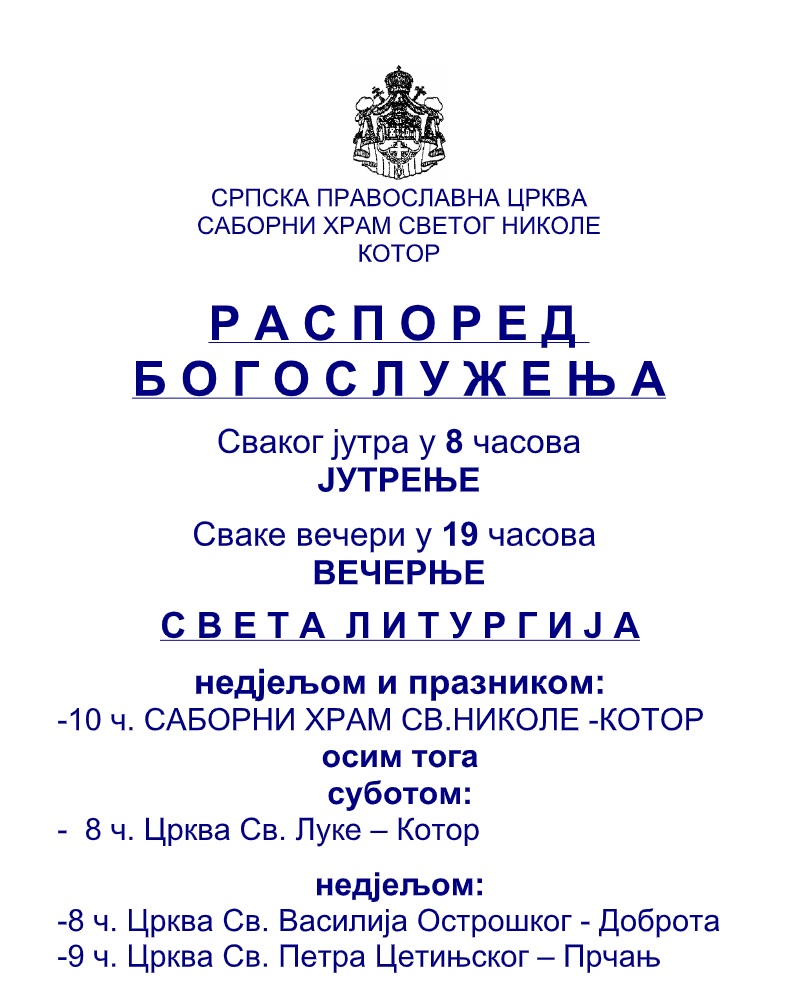
He is very much celebrated among Serbs, and is most often called Saint George or Saint George. Many celebrate him as a baptismal feast. The Serbian Orthodox Church celebrates him twice a year. The main holiday is St. George's Day, celebrated on May 6 according to the Gregorian calendar (April 23 according to the church calendar), and the second is the transfer of relics and the restoration of the Church of St. George - Đurđic, which is celebrated on November 16 (November 3 according to the church calendar). The icon associated with St. George's Day depicts Saint George on horseback slaying a dragon. Another depiction is of Saint George as a soldier with a spear in his hand. In our people, this representation is called Đurđic and is associated with the glory of Đurđic. Many monasteries are dedicated to him, among which the most famous is the Đurđevi Stupovi monastery. Saint George is revered as the protector of many countries and cities in Europe. He is also revered as the protector of cavalry, knights and chivalry, and the Crusades. He is celebrated by Greeks, Russians, Bulgarians, Serbs, English, French, Germans, Italians, etc. The new Church of Saint George was built on the site of the old one in 1872 and still exists.
PHOTOS
.png)
RELATED ARTICLES
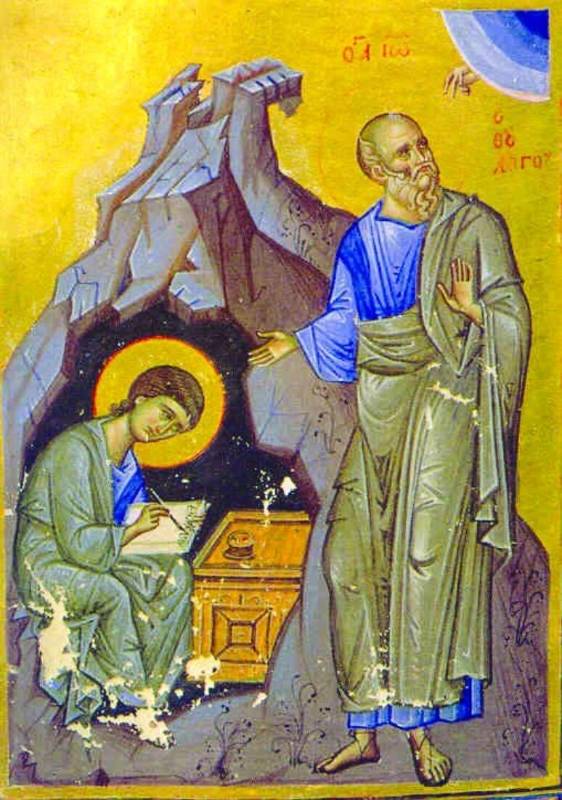
Calendar for October 9 Saint John the Theologian, Apostle and Evangelist
The son of the fisherman Zebedee and Salome (the daughter of Joseph, the...
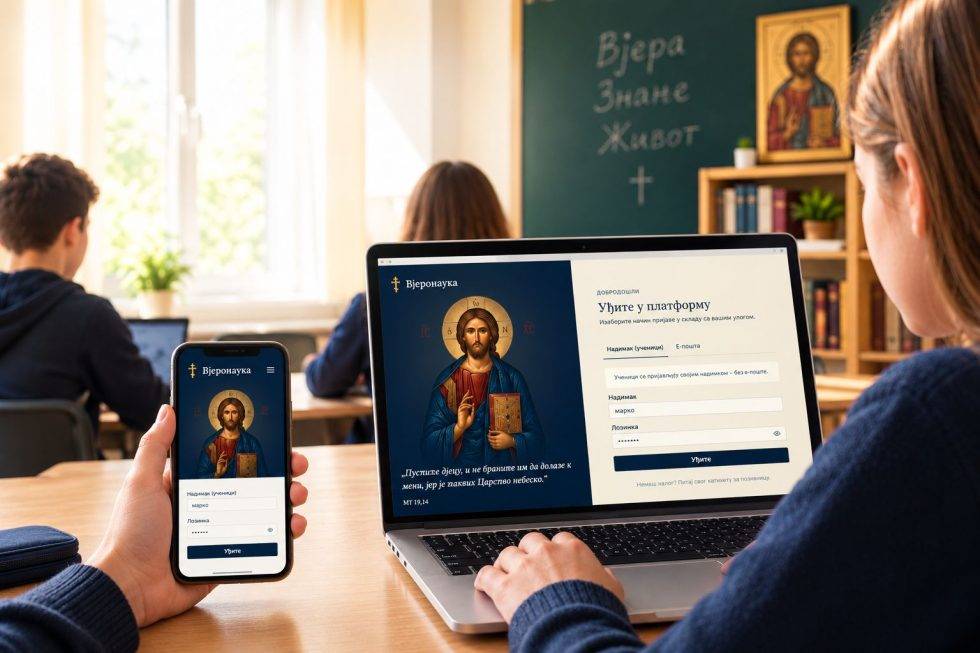
"Vjeronauka.me" – A New Digital Platform from the Metropolis Catechetical Board
The Catechetical Board of the Metropolitanate of Montenegro and the Littoral...
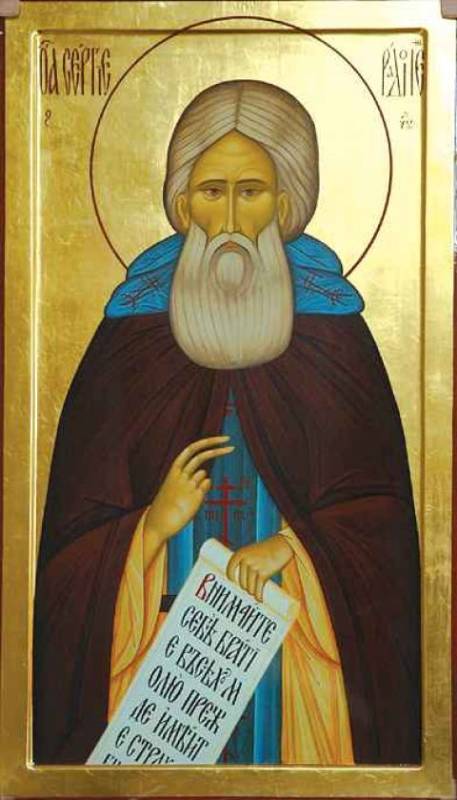
Calendar for October 8 Saint Sergius of Radonezh
A great ascetic and luminary of the Russian Church. He was born in 1313 in...