
We are called to preserve peace and harmony among ourselves, but also to live in peace and respect with all the peoples with whom we share this blessed space
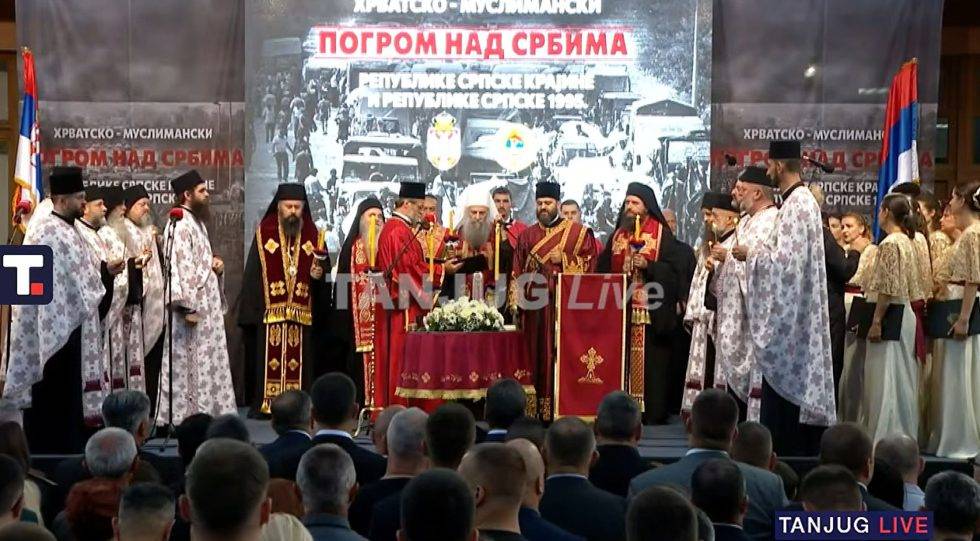
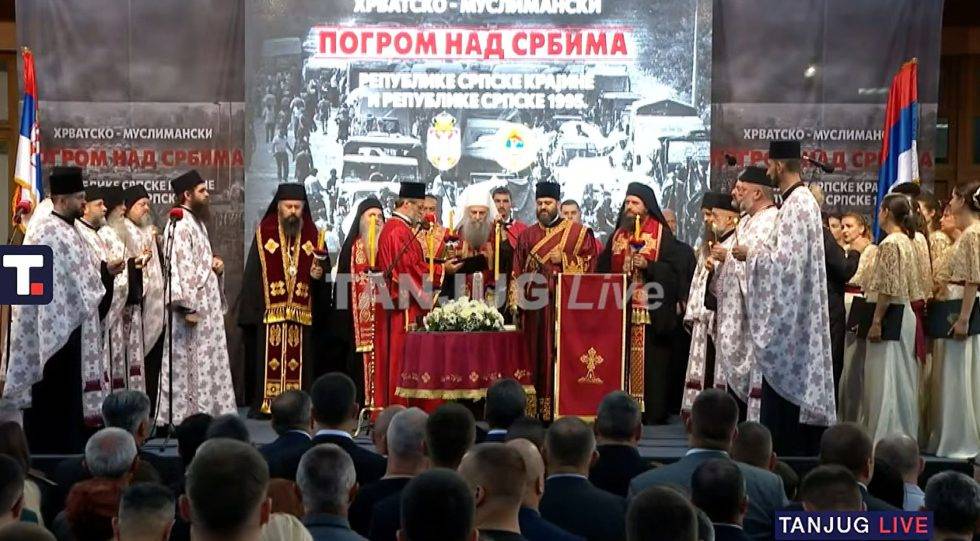
Speech of His Holiness the Patriarch of Serbia, Mr. Porfirije, held on August 4, 2026 in Mrkonjić Grad on the occasion of the Day of Remembrance of the Victims and Expelled Serbs in "Storm"
Your Eminence, Bishop Sergij, hosts of this God-saved diocese; brother hierarchs, esteemed President of the Republic of Serbia; esteemed President of the Republika Srpska; esteemed members of the Presidency of Bosnia and Herzegovina; Presidents of the Assemblies of the Republic of Serbia and the Republika Srpska; esteemed President Mr. Dodik, dear Mr. Knežević; dear spiritual children, children of Saint Sava, glorious Krajisnica, may God help you all!
Year after year, we gather in different places to prayerfully remember the innocent victims of the terrible persecution of our people from their centuries-old homes called "Storm" and to embrace all who still bear the wound of that unprecedented exile on the soil of Europe in the twentieth century.
Tonight here, in Mrkonjić Grad, I will not look for new words compared to those we have spoken before, because the truth remains the same, the pain does not cease with the passage of time, and our obligation before God to remember our suffering relatives remains permanent and unchangeable.
Here, in Mrkonjić Grad, which itself bears the deep wounds of suffering, we are brought together tonight by love for our martyrs, relatives, neighbors and compatriots who innocently lost their lives during the terrible persecution from their centuries-old homes in the areas of Dalmatia, Lika, Kordun and Banija in August 1995. With special pain we remember the victims on the Petrovac Road, where, in the refugee column and on the road to salvation, innocent people, the elderly, women and children suffered.
In their suffering, but also in the perseverance of all who carried the cross of exile, the words of the Holy Apostle Paul were fulfilled: “We are afflicted in every way, but not crushed; perplexed, but not in despair; persecuted, but not forsaken; struck down, but not destroyed” (2 Cor 4:8–9). For even when they were left without homes and homelands, our exiled brothers and sisters carried within them the faith that the Lord had not abandoned them and the hope that evil does not have the last word. We remember all of them tonight in prayer, praying to Christ God, who suffered on the Cross himself, but also conquered death by death, to grant them peace and eternal life. We also remember all those who thirty-one years ago left their centuries-old homes and set out in endless columns for the Republic of Srpska and Serbia, carrying in their hands the most essential things, and in their hearts their homes, homelands, shrines and the graves of their ancestors.
We are gathered here by the desire to prayerfully remember the innocent victims and sufferers of our race, because prayer is the deepest and most worthy form of remembrance. Prayer raises before God both the pain of the victim, but also the wound of the one who remembers. It preserves the truth, and frees the heart from the hatred that binds a person to evil again.
These sufferings, as well as the memory of all the bitter episodes of our long-suffering history, should bring us, as a baptized people, back to what we have always been, back to our roots, turn to God and direct us towards each other as brothers and sisters, as a community, as a single and united people. They should lead us into a true and deeper understanding of the words of Christ: “Love your neighbor as yourself” (Mt 22:39), and even further and more than that: “Love your enemies” (Mt 5:44).
And tonight we call the commandment of love into our memory and into our hearts. At the same time, we know that it is difficult for a person to love an adversary and an enemy. Only Christified people, saints of God, grow to the fullness of such love. However, Christ's commandment shows each of us the way and calls us to the constant struggle of cleansing our hearts of self-love and self-sufficiency in order to multiply joy, love and peace within ourselves.
Therefore, I feel a duty and responsibility to call on all of us, the spiritual descendants of this great saint, at this moment, as always from the throne of Saint Sava, not to allow hatred to overwhelm us instead of love for our neighbor, to allow what unfortunately often happens among us today to become normal: that our neighbor turns into a stranger, that our brother becomes an adversary, and that differences turn into an occasion for hostility; in other words: that hatred of our neighbor, i.e. hatred among ourselves, becomes the only acceptable way of life.
God's commandment on love has a very specific content. It directs us to the people with whom we live. We owe love to each other, first of all in the family and in marriage: spouses to each other, we owe love to our parents and children, brothers and sisters; then to our neighbors, colleagues, fellow citizens, we owe love to our people.
By learning to love those with whom we directly share the gift of life, by the grace of God we become capable of recognizing in every person a brother and an icon of God. Only by loving our own, by loving our people do we become capable of loving others, of loving those of others, of loving and respecting other people and other peoples.
Therefore, again and again I pray to the Lord and call on all of us to be as much as we can above narrow, selfish and ideologically motivated particular interests and to, in the spirit of Christian and Orthodox conciliar
PHOTOS
.png)
RELATED ARTICLES
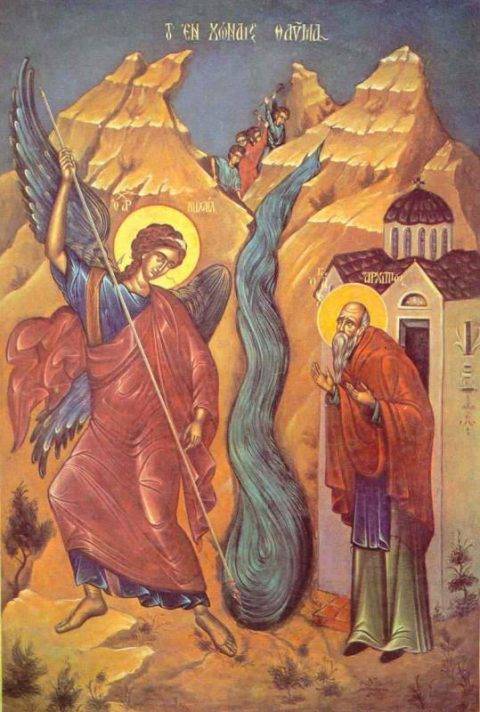
Calendar for September 19 The Miracle of the Holy Archangel Michael
Saint John the Theologian prophesied that a spring of miraculous water would...
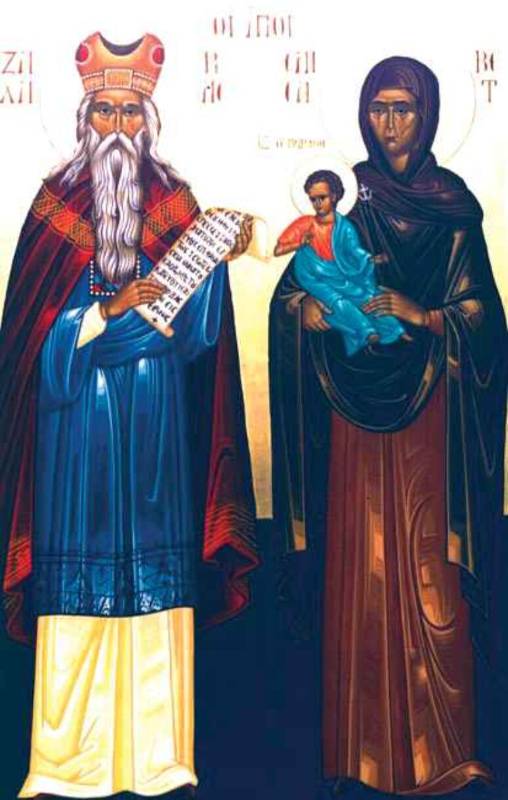
Kalendar za 18. septembar Sveti prorok Zaharije i pravedna Jelisaveta
Zaharije je otac Svetog Jovana Krstitelja, sin Varahijin, iz plemena Aronova,...