IN THE PORT OF THE CHURCH OF ST. NICHOLAS, BOOKS BY MATIJA BEĆKOVIĆ
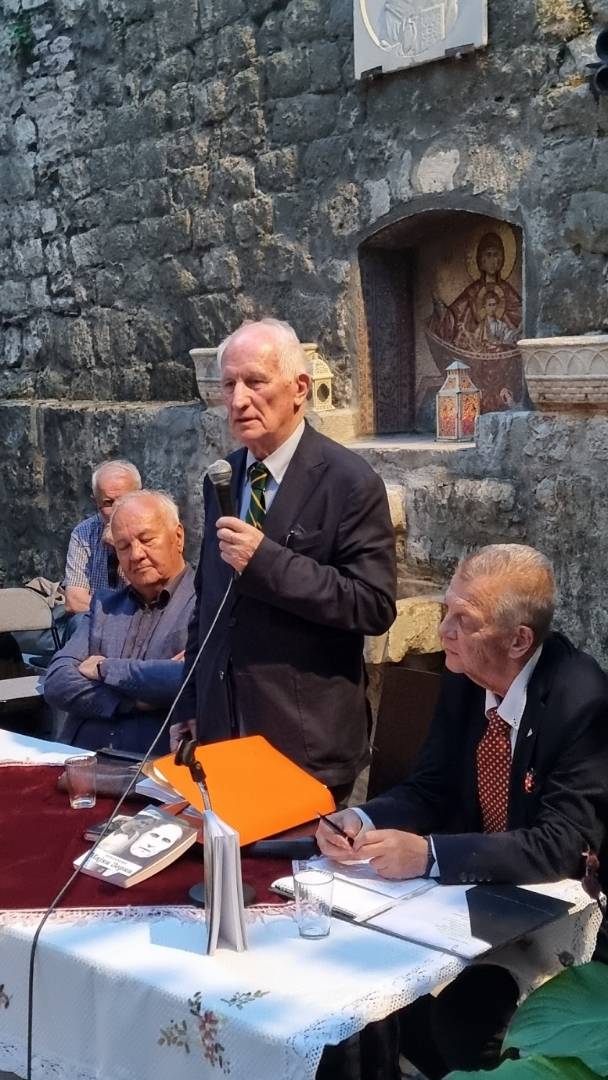
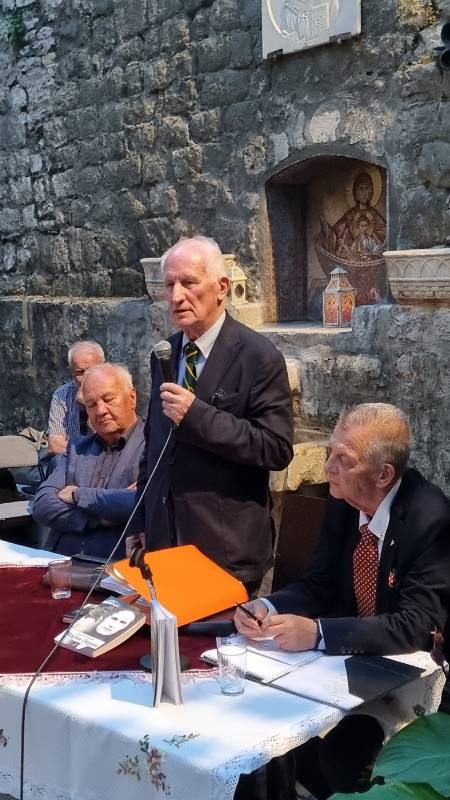
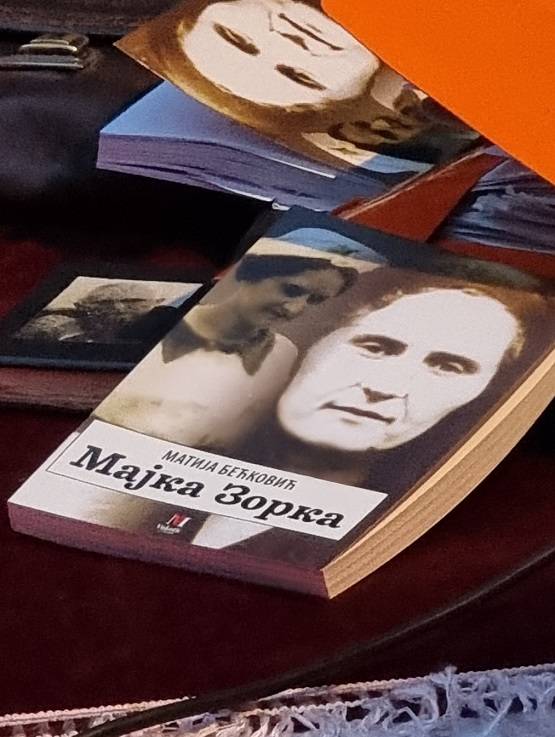
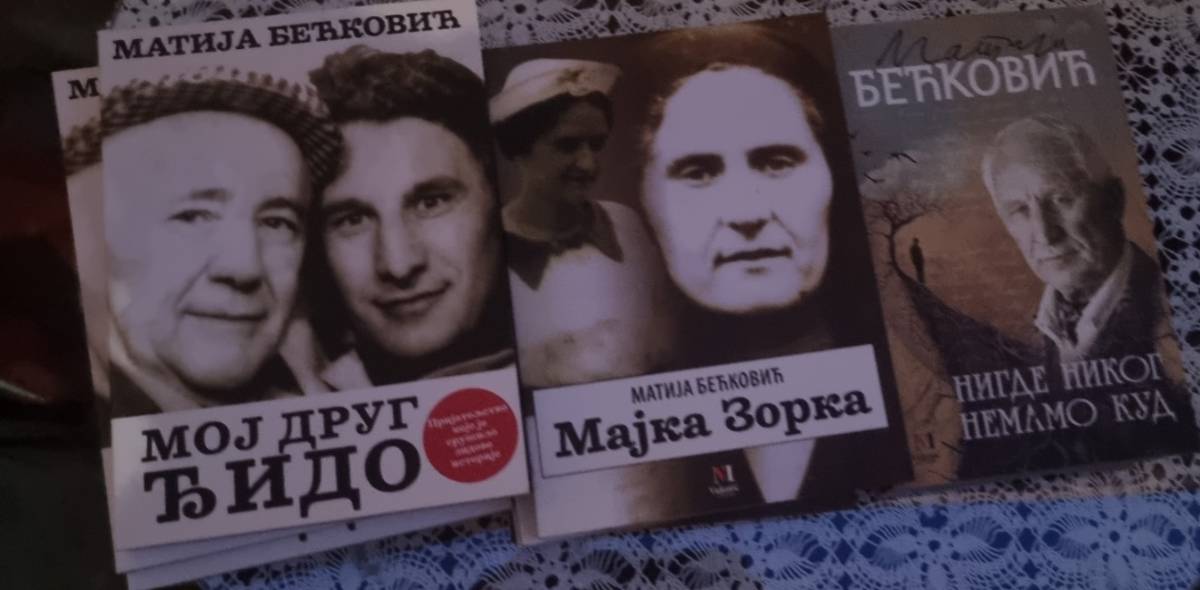
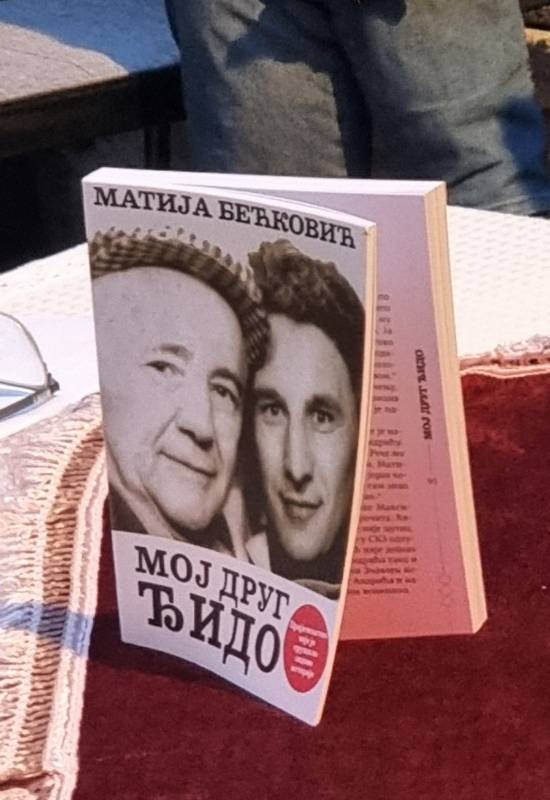
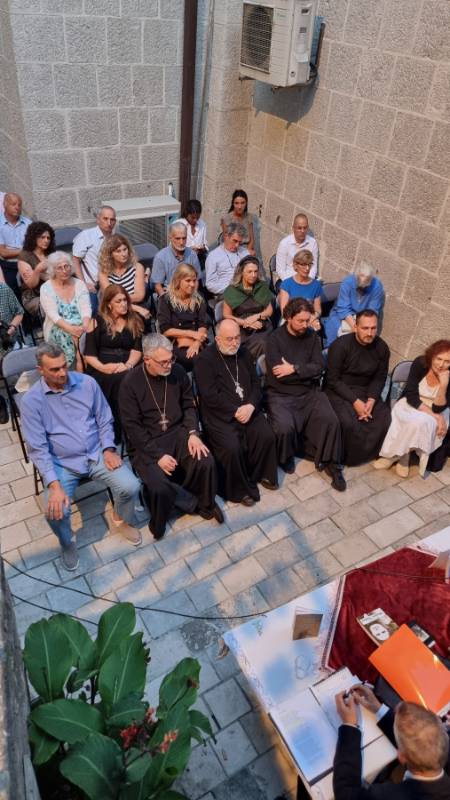
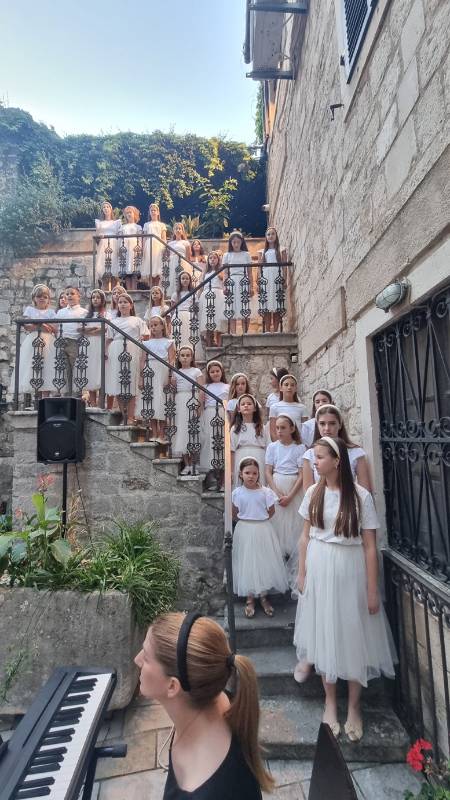
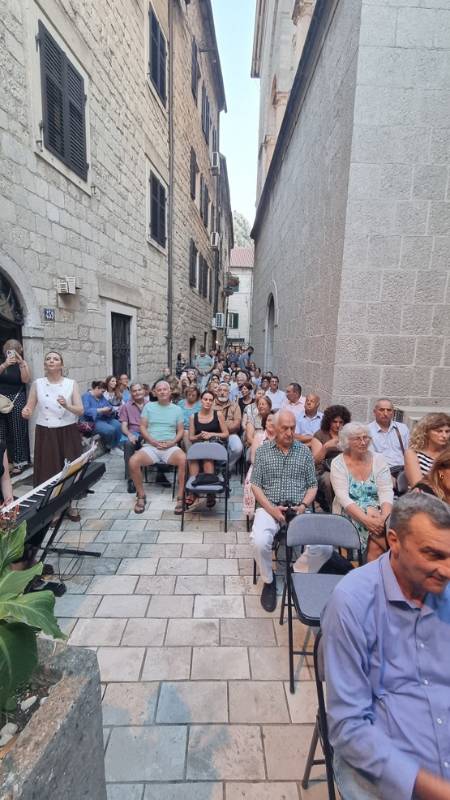
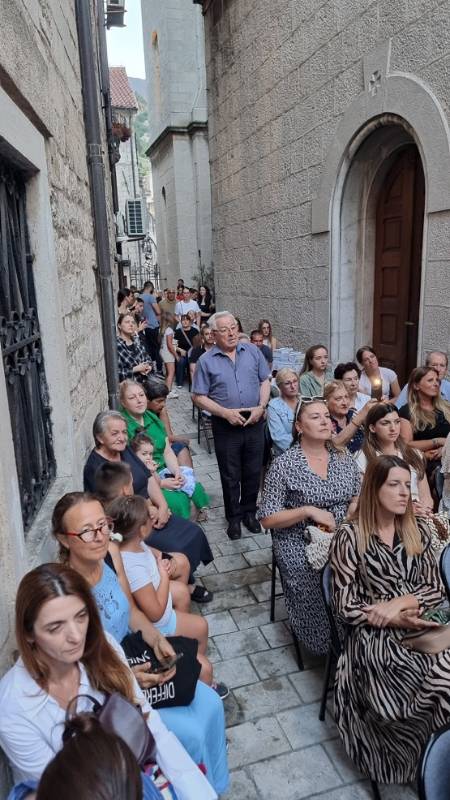
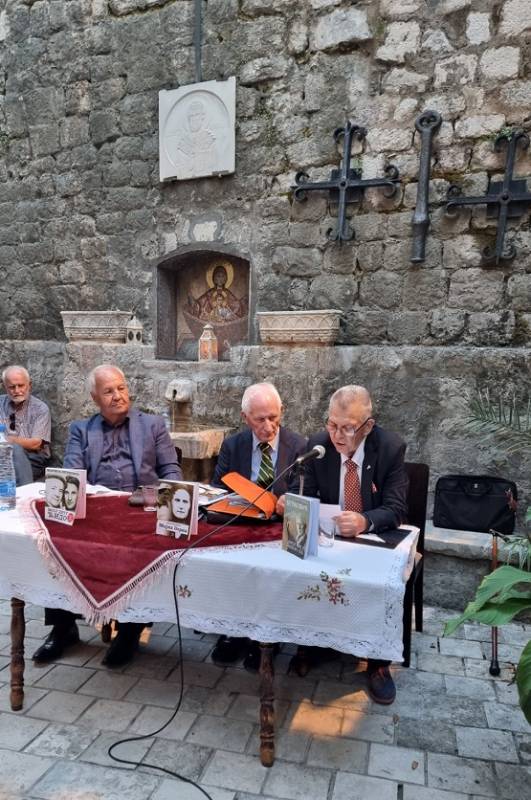
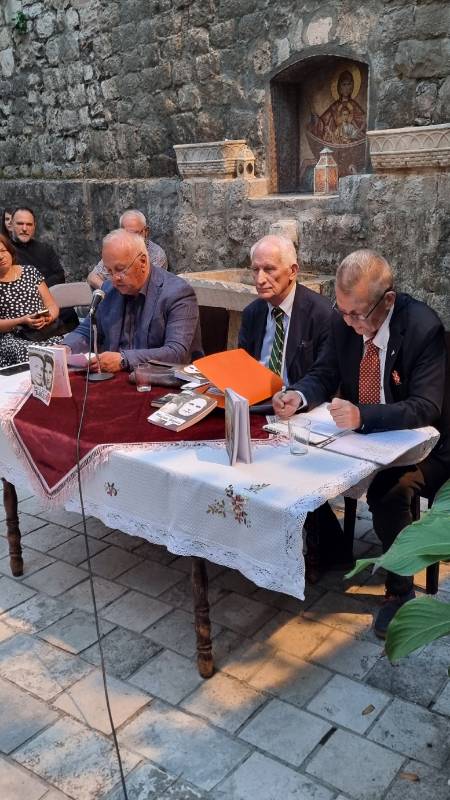
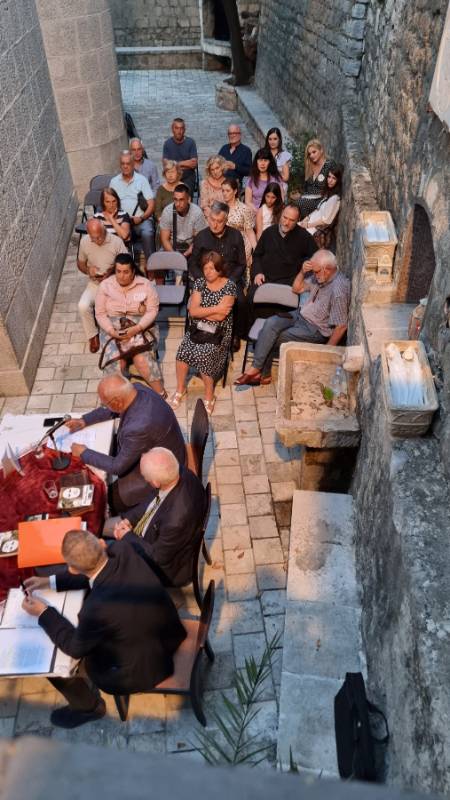
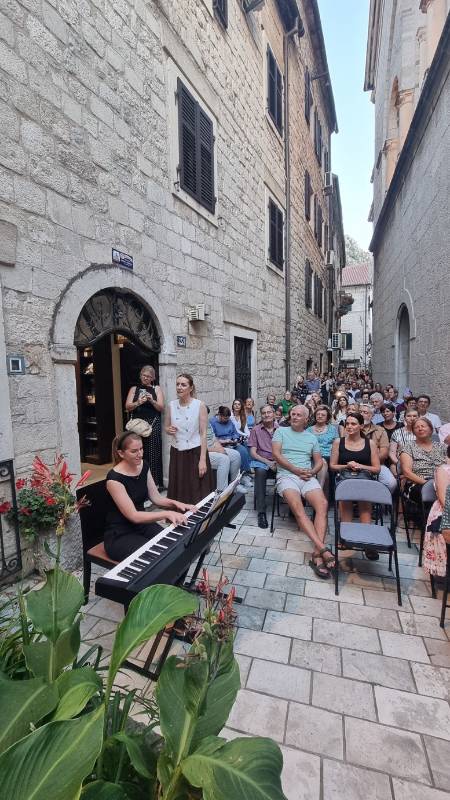
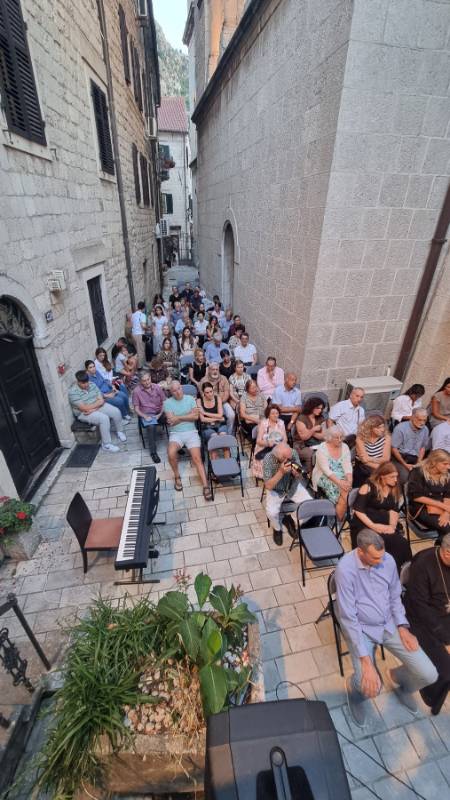
Organized by the Serbian Orthodox Church Municipality of Kotor, in the port of the Church of St. Nicholas in Kotor, a program entitled "Druženje sa Matija Bećkovićem" was held yesterday. Three new Bećković books were presented: "Mother Zorka", "Nobody, Nowhere, We Have Nowhere" and "My Friend Đido". The speakers were the poet and honorary member of the Kotor Serbian Singing Society "Jedinstvo", the journalist and long-time editor-in-chief and director of the Belgrade "Novosti" Manojlo Manjo Vukotić, and the mediator was the journalist Dušan Davidović. The program, which was also marked by the presence of a large audience, featured the children's choir of the Serbian Singing Society "Jedinstvo" with conductor Ivana Krivokapić and prof. Anom Mihaljević (piano).
“Honorable fathers, distinguished guests, brothers and sisters, we have an extraordinary opportunity today, on the feast of Saint Joanikije of Bokek, the great martyr, to welcome in our midst the greatest living poet of the Serbian language, Matija Bečković, to greet the honorary member of “Jedinstvo”, whom we once heard in Kotor on several occasions at the St. Sava academies and on numerous other occasions. Tonight, he will present to us the books created in the last two years, published by the prolific publishing house “Media Vukotić”. A year ago, at this same place, the legend of Yugoslav journalism Manjo Vukotić presented to us the book of Princess Jelisaveta Karedjordjević, and tonight you will hear reviews of three books by Matija Bečković. However, our connection with Manjo Vukotić is not accidental. Namely, the Serbian Brewing Society “Jedinstvo”, as well as Manjo Vukotić, are recipients of the recognition of the Cultural and Average Community of Serbia, the exceptional “Vuk Award”, said Davidović in his opening remarks.
Names of books “My Comrade Đido” and “Mother Zorka” were given to Manojlo Manjo Vukotić. “I don’t know in which chests Matija kept old papers and a red notebook decorated with the hand of his mother Zorka. On the pages is written a kind of diary, kept in the Kolašin communist casemate, in 1947. The wife of a Yugoslav officer, mother of three children, three naked little birds, “Chetniks”, does not write about hunger, about interrogation, about misery, about torture, but only about her children. “Dear children”, that’s how she always wrote her notes. Matija tore out lines from his mother's red notebook, which she wrote down at his request and called it a "Sad novel" and of course he added his own," said Vukotić about the book in which Matija Bećković builds on her mother's stories and writes for the first time about her life, growing up and schooling, her suffering for her father and her mother's hard struggle for the lives of her children.
The second book that was presented last night is a new collection of verses, as Vukotić said, with a somewhat unusual title "Nigde nikog, nemamo kud".
"The very title hints that Bećković opened a new garden of poetry. And it really is, not only verse, voice, imagination, but also new themes. This is the world we live in today, in which we make new walking circles every day, and it is not so seductive. You can feel the smell of hatred in it, mental homeless people and independent mercenaries are strutting around. In it they sell us canned air, artificial meat and pills with a chip. Aliens preach to us about the wrong peoples, about a new ethic, about a burnt planet, about more ordered earthquakes, and there are also bots and barking for a wage. This poetry is a cry in the silence of a tired world, poetry that does not whisper, but thunders. The verses are not a consolation, but a call to wake up. Man has become a lonely rhinoceros, the last one who refuses to bow down”, said Vukotić.
He says of his latest, third book that it is “wonderful, exciting, original both in content and in the way of writing, because there is nothing similar in Serbian literature”. “The book is called “My Friend Đido”. It is dedicated to the friendship of the poet (Matija Bećković) and the greatof the revolutionary Milovan Đilas, the most famous dissident, writer of various and rich books, which some today challenge him somewhat. Our friendship was the kinship of two poets, of the same tribe and of the same celebrity. Like it or not, we represented two truths, two essences, two sides of the same tragedy. He by rank, I by fate. I believe that through our friendship we reduce the gap and heal the most closed wounds of our people. And after decades of friendly love, no one has moved from their place - the best proof that love and friendship are more important than sides and brighter than one-mindedness", wrote a very important message in this book Bećković. In "My Other Đido", Bećković begins the story of friendship with Đilas, but he does not open just one chapter of Yugoslav history, he opens the heart of an era, the heart of a man and a poet, the heart of a revolutionary who paid the price for his beliefs. On one side, the son of a man who was taken away too soon by the communist darkness, and on the other, one of the creators of that same movement who distanced himself from him and became the most famous dissident of his time, not only in this region", said Vukotić.
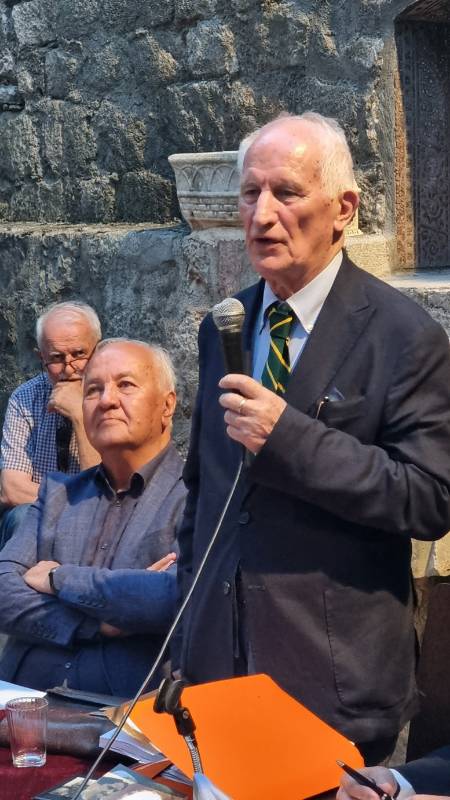
The poet Matija Bećković then addressed the audience, reminding that he has been reciting his verses between the churches of Kotor for a long time. "It is a special honor and excitement for me to do this today on the day of St. Jovaniki Lipovac and under the shadow of the unforgettable rock personality Momo Krivokapić. For the book "Majka Zorka" I quoted Ivo Andrić, who says: "All just suffering without meaning and reason". Andrić did not repeat a single sentence in his works, and he repeated this "all just suffering without meaning and reason" several times, so that it was also at the beginning of the book "Majka Zorka".
If I'm talking about my mother, it's a bit embarrassing to listen when someone else is talking, let alone me," said Bećković.
The verses he then spoke sum up the content of this book:
"Mine were all on the other side,
all retreated to the Brick Bridge,
but that side and no side remain,
and the graves are beyond her,
my loved ones are missing.
And that's the only thing they won in the country they fell for and in the language they spoke.
Those who killed them are also mine, but we do not intoxicate those victims,
we are already counting the dead to the living,
so as not to exterminate the hope that somewhere a living lamb was lost, mutilated and unburied".
"He describes his mother's life as "a widow's". "She was married for six years and a widow for sixty. So everything she talks about is part and explanation of this song you heard,” said Bećković.
Bećković continued by talking about the book “My Friend Đido and I”, in which he describes one of those friendships that defies both history and ideologies. He took the verses of Jesús for the book: “The hatred of the mind is worse than any other, avoid partisanship like the plague”. The announcement of the company “Vukotić Media” emphasizes that in the book “on one side – the son of a man who was swallowed by the communist darkness, on the other – a revolutionary who was at the top of that same regime, and then became its most famous dissident. A loyalty was born between the two of them: conversations, letters and intimacy that silently demolished the walls that wars and revenge had built”.
Mediator Dušan Davidović recalled on this occasion that Bećković spoke at the grave of Milovan Đilas, but also that the reconciliation that the two of them reached “is coming to these beds of ours somewhat slowly”.
“My comrade Đido was 30 years older than me. We were friends for 30 years and 30 years have passed since his death, when I wrote “My Comrade Đido”. His name is mentioned wherever a story about our misfortunes begins. Đido is the only criminal that both the opposition and the government agree on. There is no one else but him. And he served nine years in prison and wrote several times that he could stay in prison for the rest of his life. When he received the "Order of Freedom", which Churchill and Eisenhower had received before him, the order read: "To Milovan Đilas, a heroic figure whose conscience impelled him to rebel against tyranny."
There is no other person who “turned over a full trough” and went from Milovan Đilas Street number one to Sremska Mitrovica, a penitentiary where he wrote on toilet paper, because they didn’t give him normal paper, and they thought that what was written on toilet paper was worth as much as what that paper was used for. He also came out of prison with several bags of toilet paper, and in one of those bags was a translation of John Milton’s “Paradise Lost”, the only one that exists in the Serbian language. He “set his entire family on fire” and as soon as he was released into so-called freedom, he was looking for someone from the other defeated side, so that the gap that had opened up among the people could be reduced. By some coincidence, it was me and he did something that no one else could do. Finally, in his will, he wrote that his son Aleksa would decide on the place and manner of his burial, but if he is unable to do so, he should ask my long-time friend so-and-so, the one who is telling you about it, to decide on it. He wrote that and didn't risk anything because he knew that we had talked so many times that he should be buried with his parents in his village, according to the Orthodox rite, with a priest. None of his war comrades did that. He renounced the graves, the alley of great men and heroes, and arrived in Podbišće with his father and mother. Everything that was lied about Đilas was the truth, and everything that was claimed about others was a lie," said Bećković.
From the book "Nowhere, Nowhere", poetry about the world in disintegration and the one who refuses to disintegrate with it, Matija Bećković recited the verses of the poem "There Far Away".
Predrag Nikolić
(Radio Kotor)
PHOTOS
.png)
RELATED ARTICLES
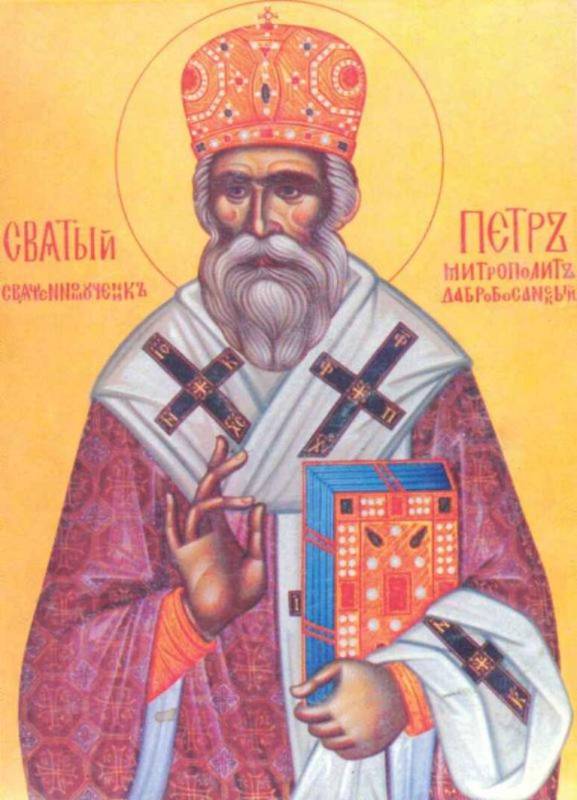
Calendar for September 17 Saint Peter of Dabar-Bosnia
He was the son of the *vojvoda* (chieftain) and priest Bogdan Zimonjić. He was...
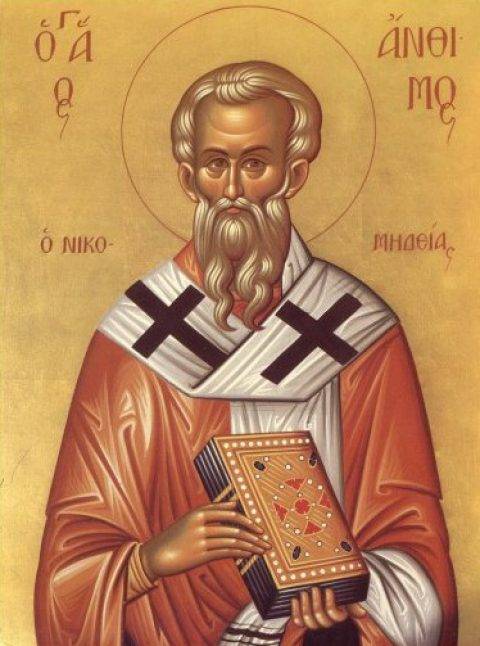
Calendar for September 16 Holy priest-martyr Antim
Born in Nicomedia. He was the bishop of Nicomedia during the persecution of...
Calendar for September 15 Saint Mamant the Martyr
He was a native of Paphlagonia, born to Christian parents. His parents were...